










Breaking News
 Will We See Western Capitals Fall?
 Is California Running A Shadow Welfare System For Illegal Immigrants
 The Fog Bezmenov Warned About Has An American Address
 Woke Developer Bungie Apologizes To Gamers...But Not Really
Top Tech News
 Tesla Model 3 killer charges from 10 to 97% in just 9 minutes
 World-first unpowered DNA computer sets speed record
 I Power 5 Buildings Off-Grid. Here's How
 The US government is pushing hard to get a working nuclear fission reactor into space by late 2028
 SpaceX Starmind AI in Space Radiator
 China Will Dominate Global Nuclear Energy Through 2035, Analyst Says
 These Absolutely Wild-Looking EVs Are Saudi Arabia's First Homegrown Cars
 BEYOND THE MOON: NASA plans a nuclear-powered fleet to push DEEPER into space
 Big Oil Backs Mazama's $135 Million Bet On Superhot Geothermal
 Quantum compass takes flight on Northrop's Lumberjack drone


Waymo's Latest Safety Numbers Sure Make Human Drivers Look Bad
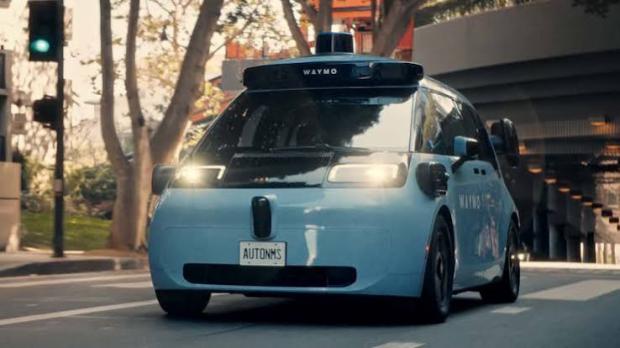
Robotaxis are a pretty polarizing subject. People are still a bit distrusting of them—after all, changing out the human brain for some silicon isn't an easy concept to grasp. And with some of the more high-profile screw-ups that the public has seen, it's easy to wag a finger when one passes by.
But when it comes to actually getting into an accident, it turns out that Waymo's robotaxis are actually way less likely to cause injury than when us meatbags are actually in the drivers seat, at least according to the company's publicly shared data.
The data comes from Waymo's latest blog post where it reveals that its cars have 82% fewer incidents that result in an injury when compared to a human driver. And before you think that's just a small sample of driving, Waymo says that figure is its cumulative total as of June and represents over 270 million miles of fully autonomous driving.
For serious crashes, that number moves the needle even more in Waymo's favor.
Data shows that Waymo's cars were involved in 95% fewer collisions that caused serious injury of worse, which effectively represents a 20-fold reduction compared to humans. There were 93% fewer pedestrian incidents that resulted in injuries compared to human drivers. For cyclists and motorcyclists, the figures were 86% and 82%, respectively.
Let's put this into perspective a bit more. Waymo's data shows that, on average, there are 1.9 crashes per million miles (known as "Incidents Per Million Miles") in the U.S. However, in the areas where it operates, the frequency of incidents with an injury reported is higher at around 3.77 IPMM. Waymo's operational total is significantly lower at just 0.67 IPMM. In fact, it even managed to maintain that same statistic in San Francisco where the average figure for humans reached 6.64 IPMM.
There are some asterisks, of course. Waymo's numbers only measured the five metropolitan areas where it operated during the study period. Those national numbers represent everywhere—every road, every human screw-up, and any poorly-designed road structure that might even throw the smartest, most sensor-equipped car in for a loop. Still, even a recent independent study by the IIHS backs up Waymo's point: Its driverless robotaxis crash far less frequently than humans.
So, sure, maybe those Waymos on the road can be a bit of a nuisance to the neighborhood. And maybe they're getting a bunch of parking tickets. And they used to honk in the middle of the night while people were trying to sleep. But there is an undeniable uptick in the safety of passengers and vulnerable road users that's pretty hard to overlook.
Based on its total miles driven, Waymo interprets the data as showing that it avoiding 841 injury-causing crashes over the 271 million miles that its cars have driven without anyone behind the wheel. That's a good figure. As the company expands to more markets—including ones with snow—we'll see how the statistics evolve.