










Breaking News
 Diesel Export Ban Off The Table? Ted Cruz Relays White House Assurances To Refinery Heads
 Saudi, Turkish, Pakistani Military Chiefs To Hold Urgent Meeting Over Yemen War
 The Commercial Real Estate Crash Is Moving From Paper Losses To Realized Losses
 Ceasefire Begins After Trump and Iran Forget Whose Turn It Was To Attack The Other
Top Tech News
 Tesla Model 3 killer charges from 10 to 97% in just 9 minutes
 World-first unpowered DNA computer sets speed record
 I Power 5 Buildings Off-Grid. Here's How
 The US government is pushing hard to get a working nuclear fission reactor into space by late 2028
 SpaceX Starmind AI in Space Radiator
 China Will Dominate Global Nuclear Energy Through 2035, Analyst Says
 These Absolutely Wild-Looking EVs Are Saudi Arabia's First Homegrown Cars
 BEYOND THE MOON: NASA plans a nuclear-powered fleet to push DEEPER into space
 Big Oil Backs Mazama's $135 Million Bet On Superhot Geothermal
 Quantum compass takes flight on Northrop's Lumberjack drone


Trump Prepares for an Invasion of Cuba
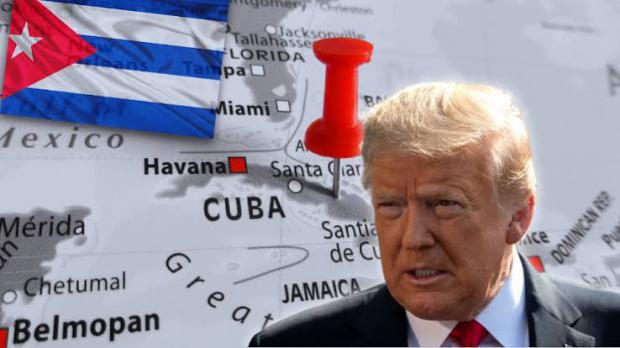
The Secretary of State insisted Cuba is a threat to the national security of the United States, although he did not provide evidence to support the claim.
Rubio made his remarks on the same day the Justice Department unsealed a murder indictment against former Cuban President Raúl Castro and the United States Southern Command sent the USS Nimitz carrier strike group to the Caribbean.
The indictment concerns the Cuban shoot-down of a Brothers to the Rescue (Hermanos al Rescate) aircraft in 1996. Brothers to the Rescue is headed by José Basulto and a group of Cuban exiles. Basulto admitted in testimony he is an anti-Castro CIA operative.
CBS News reported on September 25 that the US Army Reserve is examining whether it can provide the Southern Command with police forces, medical personnel, and other support units within the next four months, according to an internal Army message.
Though the message makes no reference to Cuba, the request is for continued military planning aimed at Cuba, according to multiple U.S. officials who spoke to CBS News under condition of anonymity because they were not authorized to speak publicly.
Prior to the Army message, the US conducted reconnaissance operations on the seafloor and maritime approaches surrounding the Cuban island. "Separately, U.S. airpower components were placed on heightened readiness and directed to pre-stage personnel for potential deployment. Those plans, however, did not come to fruition," according to CBS.
Cuba is "in a lot of trouble," Rubio said in May. He warned the US is prepared to invade Cuba if and when Trump gives the order. The US Navy build-up at the time was the largest deployment outside of West Asia.
These strategically placed assets set the table for military action, from a capture of Havana's leadership much like the seizure of former Venezuelan President Nicolas Maduro, to a series of precision strikes. And they open the possibility that the U.S. throws itself into the third international conflict of the Trump administration.
It is estimated the US would require more than 100,000 troops to conduct an invasion of Cuba and air and naval support would be essential for operational success. The Cuban Revolutionary Armed Forces maintain around 50,000 active soldiers and 39,000 reservists. It would not be difficult for the US military to deal with Cuba's military. However, urban combat and insurgency in rural areas would create significant challenges.
Following Trump's belligerent remarks earlier this year, Cuba's Civil Defense released a multi-page guide titled The Family Guide for Protection Against Military Aggression.