










Breaking News
 Dozens of Cars Line Up After James Fishback Offers $2.98 Per Gallon 'Pre-Iran War Price' Gas
 Why Unigrid's Sodium-Ion Batteries Are the Game-Changer for Off-Grid Energy Storage
 HUGE: Trump Ends Joe Biden's Electric Vehicle Mandate, Says Reduced Waste Will...
 Tennessee Plans All-Female Lethal Injection Team at Request of State's First Woman Being Execute
Top Tech News
 Tesla Model 3 killer charges from 10 to 97% in just 9 minutes
 World-first unpowered DNA computer sets speed record
 I Power 5 Buildings Off-Grid. Here's How
 The US government is pushing hard to get a working nuclear fission reactor into space by late 2028
 SpaceX Starmind AI in Space Radiator
 China Will Dominate Global Nuclear Energy Through 2035, Analyst Says
 These Absolutely Wild-Looking EVs Are Saudi Arabia's First Homegrown Cars
 BEYOND THE MOON: NASA plans a nuclear-powered fleet to push DEEPER into space
 Big Oil Backs Mazama's $135 Million Bet On Superhot Geothermal
 Quantum compass takes flight on Northrop's Lumberjack drone


Why Unigrid's Sodium-Ion Batteries Are the Game-Changer for Off-Grid Energy Storage
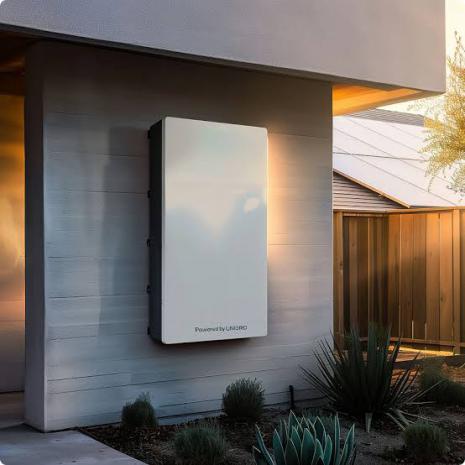
The U.S. power grid is cracking under the weight of AI data centers, geopolitical chaos, and an infrastructure that was outdated decades ago. I've reported extensively on this fragility, noting how the grid's vulnerabilities and the threat of EMPs necessitate a move toward decentralization [1]. We've seen near-collapses in Texas and rolling blackouts elsewhere, while utilities in places like Lake Tahoe have told residents they will simply stop providing power [2]. This isn't a warning anymore; it's the reality of living under centralized control that can't keep the lights on.
For years, I've been waiting for a battery that could break us free from this dying system. I made it clear I would invest in an EV when sodium-ion became viable, and I've been building a pilot program for off-grid solar storage [3]. While I have followed the rise of sodium-ion with intense interest, many early U.S. attempts, such as the collapse of Natron Energy's gigafactory, have been disappointing [4]. Now, Unigrid is finally taking the leap into the residential and commercial market, and it's the breakthrough I've been anticipating all along.
Why Sodium-Ion Beats Lithium on Every Practical Front
The fundamental problem with lithium-ion is its reliance on a fragile, geopolitically fraught supply chain. It depends on cobalt and other minerals sourced from conflict zones, which are difficult to acquire and contribute to regional instability [5]. Sodium, by contrast, is extracted from common salt, an abundant material found around the world, which gives manufacturers a supply chain that's broader and less concentrated than many existing options [6]. For anyone seeking true independence, eliminating the risk of supply disruptions is a massive victory.
Beyond the geopolitical issues, the practical performance of sodium-ion in stationary applications is superior. This chemistry operates effectively across a wide range of temperatures, including extreme cold, without experiencing the thermal runaway events that plague lithium batteries in such conditions [7]. Even more crucial for the off-grid homesteader is the cycle life. While the specific 30,000-cycle lifespan for Unigrid packs is a number I'm eager to validate in my own testing, the entire industry is moving toward a durability that outlasts the structure it powers.
This is a game-changer because the total cost of ownership plummets. Solar panels are now dirt cheap, but the battery has always been the expensive weak link. With a battery that can last decades, the economic argument for going off-grid becomes irrefutable. The risk of fire is also dramatically reduced, a critical factor when you're storing energy in your garage or barn. I've long argued that safety makes sodium-ion better suited for stationary applications than lithium iron phosphate [8], and Unigrid is proving that point on a commercial scale.