










Breaking News
 Bombshell just dropped...
 Trump wipes out the EV car mandate -- cars don't have to try to change the weather
 Elon Musk's Next-Gen Motor Destroy Entire EV Industry
 Grand Theft World Podcast 306 | The Octopus of Population Control with guest Charlie Robinson
Top Tech News
 Tesla Model 3 killer charges from 10 to 97% in just 9 minutes
 World-first unpowered DNA computer sets speed record
 I Power 5 Buildings Off-Grid. Here's How
 The US government is pushing hard to get a working nuclear fission reactor into space by late 2028
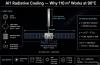 SpaceX Starmind AI in Space Radiator
 China Will Dominate Global Nuclear Energy Through 2035, Analyst Says
 These Absolutely Wild-Looking EVs Are Saudi Arabia's First Homegrown Cars
 BEYOND THE MOON: NASA plans a nuclear-powered fleet to push DEEPER into space
 Big Oil Backs Mazama's $135 Million Bet On Superhot Geothermal
 Quantum compass takes flight on Northrop's Lumberjack drone


China's disputed satellite refueling heralds new space war era
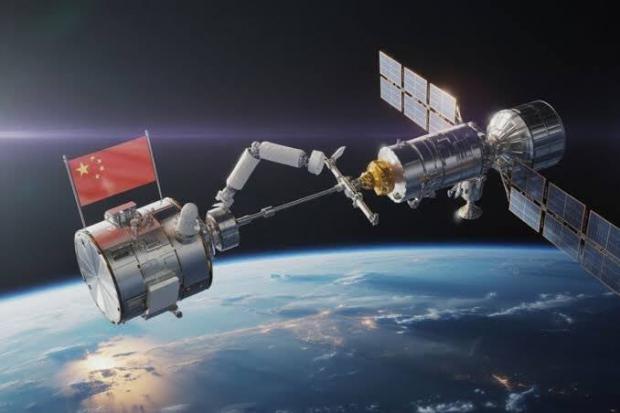
Recent disclosures about China's purported in-orbit servicing operations have intensified a quiet revolution in space, where the mechanics of satellite sustainment are swiftly becoming the frontline of great-power counterspace rivalry.
This month, the South China Morning Post (SCMP) reported that Chinese researchers claim the country carried out a pioneering in-orbit refueling operation on a high-altitude navigation satellite, though orbital tracking data raise doubts about whether the mission occurred, according to recent scientific papers and satellite specialists.
Studies by the state-backed Deep Space Exploration Laboratory and the Chinese Academy of Sciences assert that the servicing spacecraft Shijian-25 transferred 142 kilograms of propellant to the BeiDou-2 G7 satellite in February 2025, extending the navigation orbiter's operational life by eight years.
While orbital refueling could significantly cut replacement costs and bolster constellation resilience for civilian and military guidance, the technology has stoked alarms in the US, where US Space Command officials warn that space-based replenishment could provide an adversary a tactical maneuvering edge during orbital conflict.
However, Western orbital tracking records compiled by the US Space Force contradict the claimed rendezvous. Independent astrophysicist Jonathan McDowell noted that BeiDou-2 G7 and Shijian-25 remained separated by roughly ten longitudinal degrees in geostationary orbit during early 2025, concluding that the drift rates make an undetected docking physically implausible unless tracking networks misidentified the target objects.
Emerging in-orbit refueling and autonomous proximity operations are fundamentally transforming orbital warfare from a doctrine of static endurance into an active, maneuvering gray zone contest between the US and China.
Although it is unclear whether China accomplished in-orbit refueling, the feat – if achieved – carries profound tactical implications. As Paul Szymanski and Calogero Bonasia mention in a July 2026 Proceedings article, a satellite with a 15-year operational lifespan carries only enough onboard propellant for routine station-keeping and end-of-life deorbit maneuvers, leaving large evasive burns to drain this fixed reserve rapidly.
Because evasive burns shorten operational lifespans, an aggressor need only feign an interception to force defensive displacement, Szymanski and Bonasia explain. Even if the defender avoids physical impact, the aggressor permanently degrades its operational reserve.