










Breaking News
 Relax! Trump Says Oil Will "Drop Like a Rock"
 Elon's CRAZY plan for SpaceX to Dwarf the World Economy. Breaking it down
 JD Vance casts doubt on Fort Hood firing squad livestream and says he won't watch killing
 Obama & The 'Sinister Shadowland' Behind Our Politics?
Top Tech News
 Seven apps. One craft
 SHOCK CASE REPORT: Advanced Alzheimer's Patient Regains Speech, Memory, Mobility...
 Most artificial limbs rely on silicone or plastic to mimic human hands.
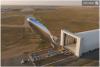 Flying cell tower beams phone signal to Japan from 10 miles up
 Chinese Commercial Reactor Achieves Nuclear Fusion with Clean Hydrogen-Boron Fuel
 Med Beds Just Took a MASSIVE Step Forward, Healing People in Days!
 Palmer Luckey: Autonomous Weapons Are Ancient and Why Anduril Won't Build Humanoids | EP #295
 A laser just photographed objects through six feet of concrete
 Elon Musk's Next-Gen Motor Destroy Entire EV Industry
 China's disputed satellite refueling heralds new space war era



Anduril's plan to save US sub edge from China's undersea surge
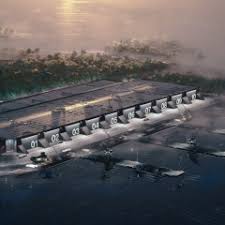
A multibillion-dollar private initiative to overhaul US submarine manufacturing marks an urgent push to revitalize naval industrial capacity at a pivotal moment in the Indo-Pacific balance of power.
This month, multiple media outlets reported that defense technology firm Anduril Industries will invest US$3.7 billion of its own capital to build a 2-million-square-foot "software-defined shipyard" at Sparrows Point in Baltimore County, Maryland, to expand US Navy submarine production capacity, according to company and defense officials.
Under a complementary US Navy contract worth up to $2.9 billion, with disbursements tied strictly to demonstrated production outcomes, the total $6.6 billion public-private venture aims to relieve severe bottlenecks in the Virginia-class nuclear attack submarine (SSN) program.
Dubbed "Arsenal-2," the coastal facility will feature a 1,200-foot graving dock, direct rail access, and digitized workflow tracking, creating 3,100 direct manufacturing jobs and adding roughly nine million annual labor hours — a vital 15% capacity boost to the nation's strained nuclear shipbuilding industrial base.
The intervention comes as legacy shipbuilders General Dynamics Electric Boat and Huntington Ingalls Newport News Shipbuilding continue to struggle to meet the US Navy's minimum goal of two hulls annually.
To bridge near-term operational needs, Anduril will begin delivering critical gating components, such as torpedo tubes, from a certified Costa Mesa site by 2028, before Maryland operations begin around 2030, with long-term plans to supply full hull modules and help meet domestic fleet goals alongside AUKUS defense pact delivery commitments to Australia.
This private-sector expansion raises the question of whether the US can overcome domestic shipbuilding bottlenecks to maintain its undersea warfighting edge as China rapidly expands and modernizes its submarine fleet. The facility could boost US submarine production at a time when conventional shipyards repeatedly miss scheduled delivery milestones.
The scale of that industrial deficit is severe. A January 2026 US Congressional Research Service (CRS) report notes that while the US Navy aims to achieve a fleet goal of 66 SSNs, actual construction has never reached that threshold and has averaged just 1.1 to 1.2 boats per year since 2022 because of persistent workforce shortages, supplier bottlenecks, and component delays.
The CRS report notes that the US Navy is now pushing to raise production to 2.0 boats annually and eventually 2.33 per year to reduce backlogs, sustain domestic fleet requirements, and build replacements for three to five Virginia-class SSNs slated for sale to Australia under the AUKUS security pact.
These ongoing industrial delays affect Western Pacific operations, where attack submarines are vital to the US in a possible conflict with China over Taiwan, and forward deployments reaffirm their strategic importance.