










Breaking News
 Democratic whiplash -- The Globalist Empire fights back
 The Great Betrayal
 Allison Inquiry UPDATE: The COVID Vaccine Loophole They NEVER WANTED YOU TO SEE!!!
 Republicans Unsure Why Voters Are Mad At Them As They Literally Haven't Done Anything These...
Top Tech News
 Prism puts an eye-controlled Linux computer on your face
 Remember Yesterday: AI For Today and Tomorrow
 Robot Mowers Invade America's Golf Courses, Putting Groundskeepers On Notice
 Monstrous 13-foot mecha craves the dangerous jobs humans avoid
 Scentronic tech lets you smell the internet
 Virgin Galactic's new rocket plane revives its bid for a space airline
 The metal kept moving east while the sellers ran, and Ronnie called the flush a week early
 Chinese Company Develops $1,000 AI-Powered Laser System To Kill Mosquitoes
 PRP vs Exosomes vs Stem Cells: Which Fits Your Condition?
 SHOCKING: The Secret (Frantzve) Family Business



Can Lasers Beat Drone Swarms? The Pentagon Is About To Find Out
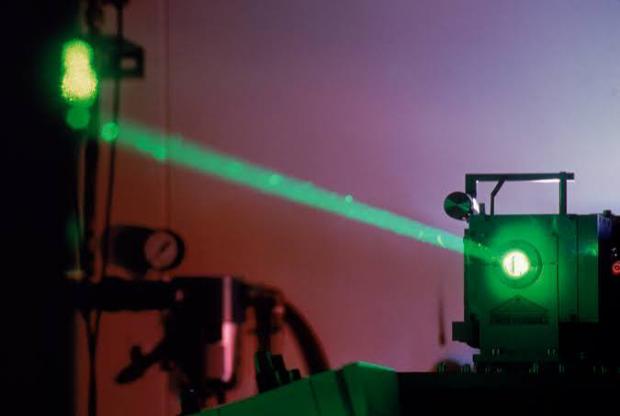
The Pentagon is betting that some of that ammunition can be replaced with electricity, selecting four directed-energy systems for operational testing at five U.S. military bases.
The Pentagon selected AeroVironment's (NASDAQ: AVAV) Palletized High-Energy Laser, Boeing's (NYSE: BA) Compact Laser Weapon System, Kord Technologies' Firefly high-energy laser and Epirus' Leonidas high-powered microwave. The three lasers concentrate energy on individual targets, while Leonidas uses microwave energy to disable electronics and can engage multiple drones.
Fort Bliss in Texas, Naval Base Kitsap in Washington, Fort Huachuca in Arizona, Grand Forks Air Force Base in North Dakota and Whiteman Air Force Base in Missouri will host the weapons. Congress mandated the five-base pilot earlier this year, with deployments scheduled to begin later in 2026.
The four weapons will operate at the five bases for a full year, giving the Pentagon its first sustained look at how directed-energy systems hold up outside short military demonstrations. More systems will get their chance in December, when Joint Interagency Task Force 401 stages a directed-energy "shoot-off" at Utah's Dugway Proving Ground, with the Pentagon prepared to buy weapons that perform well.
"High-energy lasers and high-powered microwave systems are tools that can be effectively used in a layered drone defense," Army Brig. Gen. Matt Ross, director of JIATF-401, said in announcing the selections. "This pilot program will test these capabilities in an operational environment so we can understand how best to integrate and sustain them to defend the homeland."
The Pentagon is already committing billions of dollars to counter-drone defenses, with JIATF-401 awarding 10 contracts worth up to $4.15 billion in September under a wider procurement vehicle with a ceiling of $7 billion.
The cost difference can run into millions of dollars per engagement. According to the Government Accountability Office, firing a directed-energy weapon costs approximately $1 to $10 in fuel for electricity generation and cooling, compared with $4.1 million for a Patriot PAC-3 MSE interceptor in fiscal 2023. The Patriot can engage more sophisticated threats, including ballistic and cruise missiles, but using conventional interceptors against inexpensive drones creates an enormous cost disadvantage. Lasers and microwave weapons eliminate the need to replace ammunition after every engagement, although their effectiveness depends on available power, cooling, range and operating conditions.