










Breaking News
 The Trump White House is starting to admit that your bank account and airline tickets...
 iCloud, App Store, and other Apple services hit by ongoing outage
 Every TV and radio in the country is going to play the emergency alert tone today. Your phone won
 China used more coal in just four years than the entire world did in the coal-heavy 19th century
Top Tech News
 SpaceX Just Caught Starship on Its FIRST Attempt!
 Solid-State Cells Can Make The U.S. Competitive In Batteries Again: CEO
 Jetson ONE personal eVTOL pod is about to go full sky patrol
 America's INSANE BREAKTHROUGH Could Replace Septic Tanks Forever
 Amazing DIY Building Material for Home & Yard - Inexpensive and Easy!
 Researchers have discovered a massive deposit of hidden water...
 Amazon's Ring Unveils Flying Drone And Robot To Patrol Homes And Businesses
 Anthropic Strikes $3.4 Billion Off-Grid Power Agreement to Bypass U.S. Grids, Reports Say
 The X-ray room just shrank to the size of a laptop
 Gritt and MasTec partner to bring physical AI to solar construction sites



Stop Paying for Concrete - This Japanese Method Turns Plain Sand Into Solid Stone
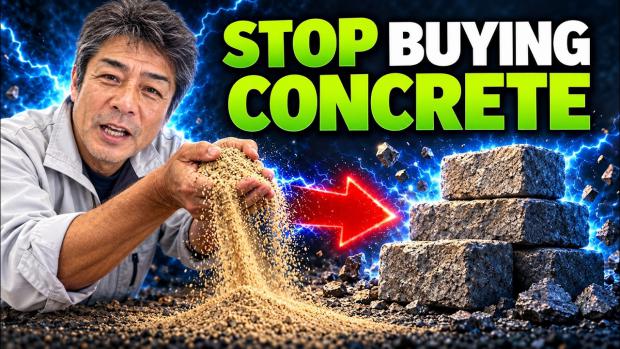
What if you could turn ordinary sand into a rock-solid building material without spending a fortune on concrete? Around the world, innovative construction techniques and traditional Japanese methods are inspiring new ways to think about affordable building, natural materials, and practical engineering.
In this video, we explore the fascinating science behind sand-based construction, the Japanese-inspired techniques that have captured people's attention, and the materials and processes that can help transform loose sand into a much stronger, stone-like structure. You'll discover how soil stabilization, mineral binders, compaction, and modern material science can change the way we approach certain construction projects.
We also examine whether these methods can genuinely reduce construction costs, where they might be useful, and what limitations you should understand before trying them yourself. While sand alone cannot simply turn into solid stone through an ordinary household trick, the right binding materials and engineering processes can create surprisingly durable results.