










Breaking News
 YOUR APPLIANCES ARE COLLECTING DATA, AND WHAT THIS COFFEE MAKER WAS CAUGHT...
 Italy just told parents of young leftwing rioters: Your brat SMASHES it, YOU PAY…
 Colonialism's Death Knell
 The Democrats Have Planned a Coup to Overthrow the Federal Government
Top Tech News
 They're Quietly REPLACING Our Food With THIS… And Nobody Is Talking About It!
 Chicago Opens First "Teacher-Free" AI School as Global Push Accelerates
 Solar Panels Are Doing Something Nobody Expected
 DeLorean climbs skyward to race electric flying cars
 Atari's 800XL returns with a keyboard, cartridges and BASIC
 Bioinspired robot airdrops into remote waters via morphing wing-sail
 Anduril interceptor adapts to emerging threats via swappable stages
 I Built a Website to Expose Solar and Battery Scams
 Whistleblower Issues Dire Warning: Rogue AI, Hacking Nuclear Programs...
 Multi-material insulation delivers up to 10,000 x the stiffness



Trump Invokes Defense Production Act To Increase Petroleum Production
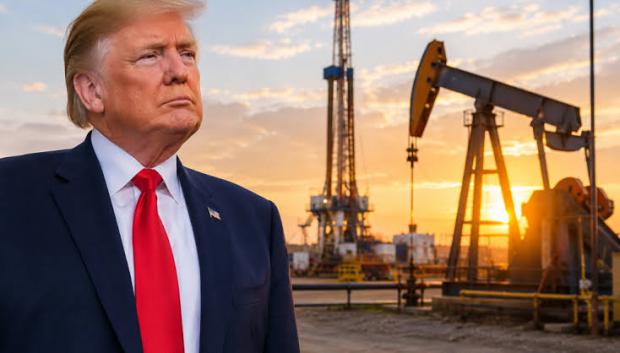
In Thursday's memorandum, Trump determined that ensuring the United States had a resilient domestic petroleum production, refining, and logistics capacity was essential for national defense.
The memorandum directed Secretary of War Pete Hegseth to complete purchases, make commitments, and use financial instruments to expand domestic petroleum infrastructure, including exploration and production, storage, marine terminals, and gathering and transmission pipelines.
"Petroleum fuels the Nation's Armed Forces, industrial base, and crucial infrastructure," Trump wrote. "Without immediate Federal action, United States defense capabilities will remain vulnerable to disruption."
The Defense Production Act, which was enacted during the Cold War, gives the president authority over the domestic industrial base in the interest of national security. Under the legislation, the president can incentivize the domestic industrial base to increase the production and supply of critical goods and materials through direct purchases, purchase commitments, loans, and loan guarantees.
Trump's memorandum said the fastest and most cost-effective ways to meet the energy demands needed for U.S. national security are the purchases, commitments, and financial support made possible under the Defense Production Act.
The president previously issued Executive Order 14156 in January 2025, declaring a national emergency under the National Emergencies Act. At the time, Trump said that America's energy production, refining, transportation, and generation capacity was inadequate and represented an "unusual and extraordinary threat" to both the economy and U.S. national security.
Trump cited the January 2025 executive order in his memorandum to Hegseth on Thursday. The memorandum said the United States would not be able to provide the energy capabilities needed in a timely manner without taking action under the Defense Production Act due to supply chain limitations, financing constraints, infrastructure and permitting bottlenecks, and lengthy lead times.
In the memorandum, Trump said expanding petroleum production, refining, and logistics capacity "is necessary to avert an industrial resource or critical technology item shortfall that would severely impair national defense capability."
The president also waived standard statutory requirements under the Defense Production Act, citing the need to expand that capacity.
Last week, Vice President JD Vance announced that the Trump administration was planning to use the Defense Production Act to expand fuel production at a petroleum refinery in Tyler, Texas, owned by Delek US Holdings.
"We want millions of gallons of commercial-grade and military-spec fuel to come out of this refinery, in addition to what it's already producing," he said.
Trump previously invoked the Defense Production Act in April and issued multiple memoranda to increase domestic coal supply chains, liquefied natural gas capacity, and natural gas transmission.