










Breaking News
 ABSOLUTELY INSANE RED ALERT: NETANYAHU IS IN FULL PANIC MODE!
 The Pennies-a-Dose Hormone Doctors Say Fights Covid and Cancer Stem Cells | Redacted
 Kids Trade For Silver, says "My Dad Taught Me"
 These Solar Panels Are HUGE
Top Tech News
 $10k EV hatch packs in 5-minute flash charging
 Apex Recordhunter electric drone sets unofficial speed record
 Space-age manna: USAF & SpaceX drop survival kit from orbit
 World's first nuclear fusion power plant coming to WA | FOX 13 Seattle
 Advanced Small Modular Reactors (SMRs)
 A U.S. energy startup has demonstrated a new type of nuclear reactor that uses existing nuclear...
 BREAKING: NIH-FUNDED MAD SCIENTISTS HAVE CREATED A HUMANOID ROBOT CONTROLLED...
 Modular phone promises total privacy at the flick of a switch
 Genetically Engineered War Dogs for 134 Pound Cyborg Dire Wolves Now – Later 600 Pound Wolves
 They're Quietly REPLACING Our Food With THIS… And Nobody Is Talking About It!



WHAT ISRAEL WANTS FROM IRAN
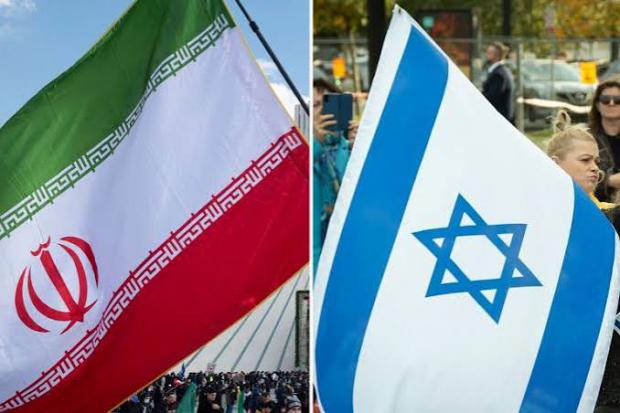
I have been reliably told by American and Israeli sources that things are quietly happening in secret talks between Washington and Tehran as the economy in Iran continues to plummet and the only way forward for Iran's leadership is to obtain a settlement focused on its nuclear program. Talk is cheap, but the current conversations have spurred some anxious Israelis with experience in military and nuclear activities to produce a position paper entitled "What an Air-Tight Nuclear Verification Regime in Iran Should Look Like."
The existence and circulation of the paper to a small group of verification experts makes clear that the ongoing secret talks have profoundly distressed Israel, which is facing worldwide condemnation of its ongoing killings and abuses of Palestine civilians in Gaza and the West Bank that many call genocide. Israel remains convinced that zealots in Iran's Islamic Revolutionary Guard Corps are secretly keeping the nuclear flame alive. The paper's key point is that any newfound nuclear inspection regime "requires an unprecedented level of intrusiveness, far outstripping standard international safeguards.
"Because trust is nonexistent and Iran possesses deep technical knowledge and a history of covert sites," the paper notes, "the regime must be built on the principle of absolute verification." The normal verification procedures of the International Atomic Energy Agency that deal with declared nuclear material will no longer satisfy Israel. The Trump White House and Iran must go further and permit IAEA inspectors access to all information and locations. IAEA inspectors also must be given authority to access any nuclear site in Iran—military or civilian—within twenty-four hours "to prevent the sanitation of evidence." In other words, there can be no cheating.
Another longstanding Israeli concern is the Iranian stockpile of uranium enriched to 60 percent known to be stored at various underground nuclear sites. The paper says the stockpile must either be completely blended down or shipped out of the country. (That condition indicates that Israel, despite its talk of a covert operation to find and remove or destroy the materials, has understood all along that such a mission would be impossible.)
I was given a copy of the paper, and I shared it with an American expert who found it to be a first-rate discussion of the technical and verification issues involved in shutting down Iran's nuclear facilities. The paper does not, the American pointed out, deal with the political issues involved in preventing Iran from obtaining the bomb. Nonetheless, he added, speaking of the Israelis, "They've put something on the table."
The Iranian regime, the American acknowledged, is now facing a collapse of institutions, including the IRGC. Many Iranian citizens are out of work, hungry, and financially desperate. He believes the population could soon be on the verge of open revolt that would not, as in earlier demonstrations, be subject to murderous retaliation from IRGC members because many in the rank and file are unpaid and demoralized. He noted that just this past weekend there were demonstrations throughout Iran, including in Tehran, by retirees and workers who, according to published reports, were protesting rising poverty and unpaid retirement funds. There was no intervention by the IRGC, although executions of dissidents are still being authorized by the Iranian judiciary.