










Breaking News
 WATCH LIVE: Pentagon Launches Doomsday Plan "FORTRESS" To Keep America Fighting...
 New AI-run super PAC aims to decide the U.S. Senate by backing third-party candidates...
 Apex Recordhunter electric drone sets unofficial speed record
 Space-age manna: USAF & SpaceX drop survival kit from orbit
Top Tech News
 Modular phone promises total privacy at the flick of a switch
 Genetically Engineered War Dogs for 134 Pound Cyborg Dire Wolves Now – Later 600 Pound Wolves
 They're Quietly REPLACING Our Food With THIS… And Nobody Is Talking About It!
 Chicago Opens First "Teacher-Free" AI School as Global Push Accelerates
 Solar Panels Are Doing Something Nobody Expected
 DeLorean climbs skyward to race electric flying cars
 Atari's 800XL returns with a keyboard, cartridges and BASIC
 Bioinspired robot airdrops into remote waters via morphing wing-sail
 Anduril interceptor adapts to emerging threats via swappable stages
 I Built a Website to Expose Solar and Battery Scams



Apex Recordhunter electric drone sets unofficial speed record
Records, especially for aircraft, are very exacting because of the criteria laid down by the Fédération Aéronautique Internationale (FAI). For example, there are arguments as to whether Yuri Gagarin was really the first man in space or if it was the American Alan Shepard, because Gagarin ejected from the Vostok 1 capsule before it reached the ground – a violation of FAI rules at the time, which stated that the pilot must remain with the craft until landing.
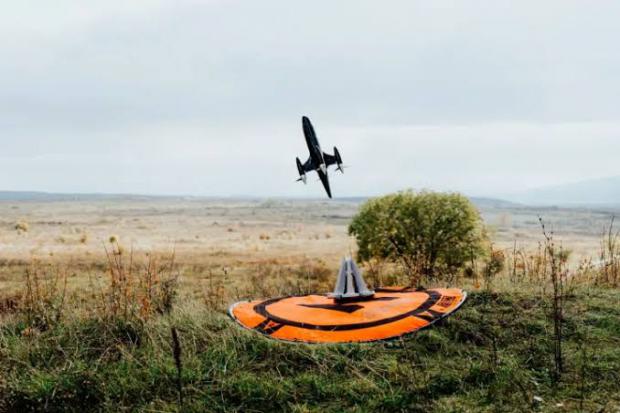
There is a similar problem with Quantum Systems' claim, which the company acknowledges. Under FAI rules, a valid speed record requires two consecutive flights over a measured course in opposite directions within a specified time limit to cancel out the effects of wind gradient. Since this was a single-leg flight by the experimental drone, the record could not be officially confirmed.
That doesn't make the flight of the Apex Recordhunter a meaningless milestone. The test flight was conducted in support of the company's development of advanced high-speed interceptor drones, including the gathering of aerothermal and electrical data. By completing such a flight on battery power alone, Quantum Systems demonstrated that high-subsonic flight using this technology is feasible.
In addition, by hitting almost 420 knots, the Apex Recordhunter exceeded the cruise speed of Russia's jet-propelled iterations of the Shahed/Geran series of drones, which fly at around 270 knots (310.7 mph, 500 km/h). Interceptor drones with performance matching this electric prototype would be capable of destroying jet drones through kinetic impact or proximity-fuzed warheads, providing a much cheaper alternative to solid-rocket-propelled missiles.