










Breaking News
 Bannon Urges Trump To Cut Ties With Brazil As Trump Calls Lula's Win "Another Rigged Electi
 North Carolina Libertarian Senate Candidate Arrested After Live-Blogging Armed Standoff With Police
 More Than 250 Hospitals Pledge To Serve Healthier Food: RFK Jr.
 Federal Judge Strikes Down New York Body Armor Ban
Top Tech News
 $10k EV hatch packs in 5-minute flash charging
 Apex Recordhunter electric drone sets unofficial speed record
 Space-age manna: USAF & SpaceX drop survival kit from orbit
 World's first nuclear fusion power plant coming to WA | FOX 13 Seattle
 Advanced Small Modular Reactors (SMRs)
 A U.S. energy startup has demonstrated a new type of nuclear reactor that uses existing nuclear...
 BREAKING: NIH-FUNDED MAD SCIENTISTS HAVE CREATED A HUMANOID ROBOT CONTROLLED...
 Modular phone promises total privacy at the flick of a switch
 Genetically Engineered War Dogs for 134 Pound Cyborg Dire Wolves Now – Later 600 Pound Wolves
 They're Quietly REPLACING Our Food With THIS… And Nobody Is Talking About It!



Israel Election Exit Polls Hint Deadlock With a Surprise 18 Seats for Arabs
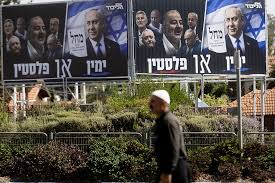
No Clear Winner
The Wall Street Journal reports Early Israeli Exit Polls Show No Clear Winner in Key Election.
Israeli Prime Minister Benjamin Netanyahu received a major rebuke from Israeli voters Tuesday but retained enough support to set up a high-stakes showdown in the coming weeks over whether he will stay in office.
Early results and polls—which could still change significantly—showed Netanyahu's Likud party winning the most parliamentary seats, though substantially fewer than the 68 seats his majority coalition now holds in the Knesset. Close behind was the party of Netanyahu's most-powerful challenger, former military chief Gadi Eisenkot, whose overall coalition was either slightly ahead or tied with Netanyahu's bloc of allies.
If the close margins hold, Netanyahu's fate would come down to whether Israel's president gives the prime minister or Eisenkot the first chance to form at least a 61-seat Knesset majority. In either case, a scenario many experts foresee is a hung parliament that ultimately heads to another round of elections, with Netanyahu hanging on as a caretaker premier.
Netanyahu's right-wing Likud party was projected to finish with up to 25 seats, and Eisenkot's centrist Yashar was estimated to have around 22 or 23 seats. The overall anti-Netanyanhu bloc was in the lead with 52 or 53 seats, or in a dead heat with the prime minister's coalition, which was projected to receive 50 seats.
The biggest surprise was the projected showing for Israel's two major Arab parties, which surged to a combined 18 possible seats from 10 seats now. Arab citizens of Israel make up about 20% of the country's population.
Netanyahu and his allied political parties have pledged not to work with Arab parties, and Eisenkot's said it would only do so with major concessions, including the acceptance of Hamas's designation as a terrorist group.
Many Israelis viewed the election as one of the most consequential in the country's history, pitting Netanyahu and his ultranationalist and religious allies against a bloc of liberal, centrist and conservative parties united around their opposition to the prime minister and led by Eisenkot.
The huge voter turnout and lack of a clear winner so far underscored the deep splits in Israeli society that worsened after the Hamas-led attack from Gaza plunged the country into three years of war. More than three-quarters of all Israeli voters had cast their ballots before polls closed, one of the highest turnout levels in any Israeli election, according to the country's Central Election Committee.
With the possibility of a return to active combat with Iran in coming weeks, Israel was facing the possibility that it would again be at war with the election still in flux.
Along with a stalemate in which neither Eisenkot nor Netanyahu can form a government, there are at least two other scenarios.
One is that Eisenkot's bloc either allies with one or more Arab parties, or seeks a fragile minority government that nonetheless relies on the Arabs vote by vote. Another is a unity government between Eisenkot and Netanyahu, which would also be unstable and would need other parties that have forsworn such an alliance.