










Breaking News
 SCIENTISTS JUST CREATED THE FIRST SYNTHETIC CELLS THAT GROW, REPRODUCE,
 Shits happening again!! But this time got busted...
 Ancient Builders Moved Stones We Still Struggle to Explain
 Man asks Grok where Flock surveillance technology will be in the next 5 years
Top Tech News
 $10k EV hatch packs in 5-minute flash charging
 Apex Recordhunter electric drone sets unofficial speed record
 Space-age manna: USAF & SpaceX drop survival kit from orbit
 World's first nuclear fusion power plant coming to WA | FOX 13 Seattle
 Advanced Small Modular Reactors (SMRs)
 A U.S. energy startup has demonstrated a new type of nuclear reactor that uses existing nuclear...
 BREAKING: NIH-FUNDED MAD SCIENTISTS HAVE CREATED A HUMANOID ROBOT CONTROLLED...
 Modular phone promises total privacy at the flick of a switch
 Genetically Engineered War Dogs for 134 Pound Cyborg Dire Wolves Now – Later 600 Pound Wolves
 They're Quietly REPLACING Our Food With THIS… And Nobody Is Talking About It!



Iranian President Holds Talks With Qatar Emir in Moscow
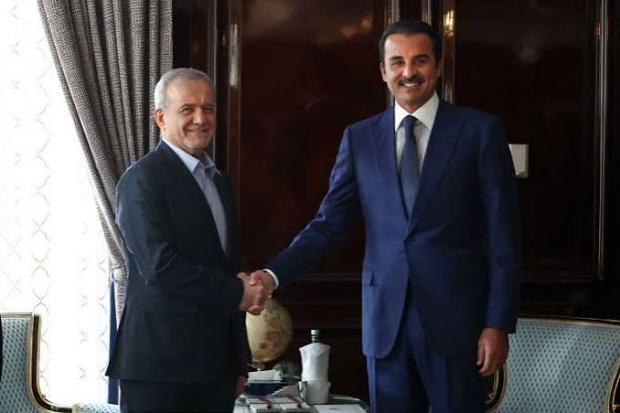
Iranian President Masoud Pezeshkian met with Qatar Emir Sheikh Tamim bin Hamad al-Thani in Moscow on Tuesday, Iran's PressTV has reported.
The meeting, which took place on the sidelines of the 8th Gas Exporting Countries Forum (GECF) summit, marked the second day in a row of high-level engagement between Iran and a Gulf Arab state, as Saudi Arabia's defense minister was in Tehran on Monday for a four-way meeting that involved senior officials from Turkey, Pakistan, and Iran.
According to PressTV, during the talks in Moscow, Pezeshkian and al-Thani "reviewed the latest status of relations between Tehran and Doha and underscored the importance of expanding political and economic ties, as well as utilizing existing capacities to elevate the level of mutual cooperation."
Readouts of the meeting made no mention of the US war with Iran, though the talks came amid threats of another major US-Israeli attack against the Islamic Republic, which is expected to happen sometime after the US midterm elections. Iranian leaders have been warning that any renewed US strikes would lead to heavier retaliatory attacks, which will involve more strikes on Gulf Arab states hosting US military bases.
In the meantime, the US continues to enforce a blockade on Iran, and Iranian forces continue to attack oil tankers attempting to cross the Strait of Hormuz. Addressing the GECF on Tuesday, Pezeshkian said the disruptions to security and the energy market were the result of US-Israeli aggression.
"The military aggression by the United States and the Zionist regime against the Islamic Republic of Iran, occurring in two phases and in the midst of political negotiations, was one of the most regrettable and dangerous events against global security," Pezeshkian said. "These illegal actions have seriously jeopardized the stability of energy markets and must be condemned and effectively countered by the world's major energy suppliers."