










Breaking News
 Qatar Signals Talks 'Breakthrough' As Khamenei Warns Iran's Retaliation Will Have...
 Polish President Seen Physically Pushing Way Into Top Court Amid Pro-EU Tusk's 'Judicial Cou
 Tech Expert Warns of Revolution, Banking Security Crisis and the Oncoming Dystopian AI Future
 Please Mr. President: Be A Peace President Like Eisenhower
Top Tech News
 Microreactor Gets DOE Approval for Full Power Testing, Previously Contracts with Army...
 Ford Fathom: Everything We Know About The Sub-$30,000 Affordable EV Truck
 Love it or loathe it, AI is birthing a golden age of science
 SpaceX has no competition -- Saurav Shroff, Starpath
 Living computers forge a 'hive mind' and work together to outsmart AI
 The Faraday duffle bag: A digital lifeline in a surveillance-saturated world
 Delivery Robots Accused Of Scanning Customers' Faces, Sharing Biometric Data
 Brace Yourselves: Serious Trouble Brewing In The Data Center Industry
 FDA-Approval for Drill-Free Cavity Care May Be Imminent After Great Phase 3 Treatment Trial
 California Startup Says It Has Injected AI-Designed Virus Into Humans For First Time



Asia should read the fine print on Musk's Starlink contracts
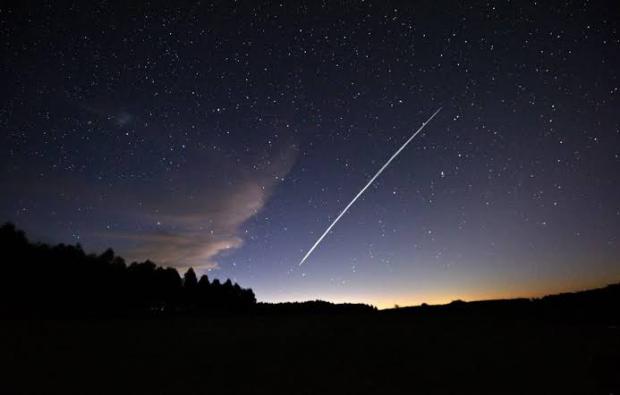
"Were Starlink to be turned off," Elon Musk wrote, "the Ukrainian front line would collapse immediately."
The line appeared in a thread in which he admitted throttling Ukraine's service and accused its military of using Starlink "for offensive drone strikes to kill people." The loophole, he said, had been closed the week before.
Taken at face value, the episode is a billionaire's temper colliding with someone else's war. But defense ministries from Manila to New Delhi to elsewhere in Asia should read it as a contract notice.
Musk said Washington controls any change to Starshield, the military version of Starlink. US Secretary of State Marco Rubio said the matter is "governed by a private commercial contract."
US Vice President JD Vance hinted at coordination with Musk, while Rubio and Defense Secretary Pete Hegseth denied any involvement. The Wall Street Journal reported that Musk ordered the slowdown himself, around the time of phone calls with President Donald Trump. Each official pointed at someone else while Ukraine's drones fell from the sky.
An adviser to Ukrainian President Volodymyr Zelensky said the cap on Starshield was 160 kilometers an hour. Ukrainian interceptors chasing faster Russian drones lost guidance, and commanders reported lost aircraft.
A switch that nobody owns is a convenient tool for a government that controls it. For a government that rents Starlink, including for defense purposes, it is a liability with a monthly fee.
Southeast Asia increasingly rents Starlink's service. The Philippine Navy's unit in Palawan operates US-supplied uncrewed vessels that report to shore over Starlink. In February, coast guard spokesman Jay Tarriela said Starlink connections on Philippine ships near the Scarborough Shoal contested with China in the South China Sea had been jammed.
Manila already knew Beijing-controlled jammers could potentially cut a link from outside. Kyiv has now shown that the vendor can cut it, too.
Every Asian defense ministry that rents Starlink services should be asking three urgent questions. First, how does SpaceX, the company that owns and runs Starlink, define "offensive?" Musk insists Starlink's terms have always described a civilian system. Kyiv denies breaking them.