










Breaking News
 'We Fear These People': Scandal Erupts After Berlin 'Left Party' Mayoral Candidate A
 Hand In Hand Toward The Abyss
 Europe's Riots Are The Bill Coming Due For Socialism And Globalism
 Qatar Signals Talks 'Breakthrough' As Khamenei Warns Iran's Retaliation Will Have...
Top Tech News
 Microreactor Gets DOE Approval for Full Power Testing, Previously Contracts with Army...
 Ford Fathom: Everything We Know About The Sub-$30,000 Affordable EV Truck
 Love it or loathe it, AI is birthing a golden age of science
 SpaceX has no competition -- Saurav Shroff, Starpath
 Living computers forge a 'hive mind' and work together to outsmart AI
 The Faraday duffle bag: A digital lifeline in a surveillance-saturated world
 Delivery Robots Accused Of Scanning Customers' Faces, Sharing Biometric Data
 Brace Yourselves: Serious Trouble Brewing In The Data Center Industry
 FDA-Approval for Drill-Free Cavity Care May Be Imminent After Great Phase 3 Treatment Trial
 California Startup Says It Has Injected AI-Designed Virus Into Humans For First Time



Trump Can Start It But He Can't Finish It. Now He Wants to Island-Hop
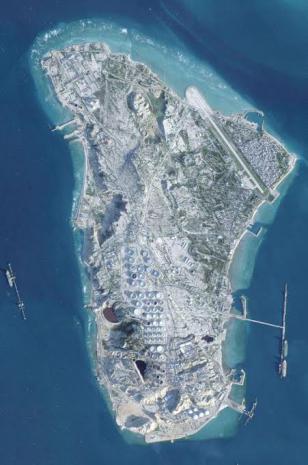
According to a source close to the White House, the plan is to seize one or more of Iran's islands in the Persian Gulf. Senator Chris Murphy, who says he has been briefed on what the administration intends to do after Tuesday's midterms, summed it up this week in four words: "their plan is insane." For once, a United States senator has understated something.
My friend Karl Miller has just finished a report on the limits of American and Israeli war power, and its conclusion fits on a bumper sticker: they can start it, but they can't finish it. Let me explain why, and then let me explain why the island scheme takes a bad strategic position and makes it considerably worse.
The cupboard is bare
Start with the thing nobody in the White House wants to talk about: missile-defense interceptors. According to public estimates from September that Miller cites, the United States has spent between one-half and two-thirds of its inventory of certain interceptor types since June 2025. Rebuilding those stocks will take at least five years, even with production ramped up. You cannot order a factory to work faster. It needs parts, qualified suppliers, trained workers and testing, and it is competing with demands from the Pacific and from allies who would also like to be defended.
And no, the Pentagon cannot fix this by firing more Tomahawks. Offensive missiles and bombs do a different job from the interceptors that protect ships, bases and cities. You can have a warehouse full of bombs and still be unable to stop the missiles coming back at you. Israel, meanwhile, depends on Washington to resupply its own defenses, which means Israel's endurance problem is really an American endurance problem with a different flag on it.
The bill comes after the headlines
Miller's central insight is that retaliation, not the opening strike, sets the limits of this war. Any president can order the first wave. The question is whether he will keep paying after Iran answers: protecting sailors and bases, replenishing defenses, repairing damage, keeping sea lanes open and explaining to voters why gasoline and diesel just went up again. On that score, I share Miller's blunt judgment. Donald Trump and the Israeli leadership do not have the stomach to carry this fight through to an Iranian surrender.
The economic bill is already staggering. Miller puts the global shortfall in diesel and jet fuel at a minimum of 3 million barrels a day. That is 90 million barrels a month and about 1.1 billion barrels a year. At $150 a barrel, replacing it would cost $13.5 billion a month. His reconstruction estimates for the Gulf's damaged energy system run from $550 billion to $2.3 trillion, over seven to ten years. Another campaign does not reduce any of those numbers. It adds to them.