










Breaking News
 Catholic Priest Unloads on Islam, Blasts Religious Leaders for Downplaying Christian Persecution
 Diehard eyepatched January 6 leader who has tattoo of Donald Trump...
 Lucid Is Slashing $15,000 Off The Gravity, But The Deal Won't Last Long
 Bright Videos News, Nov 20, 2026 - The Fleecing of the Sheeple with Anthropic IPO + Daring...
Top Tech News
 Dubai Just Finished the World's First Permanent Air Taxi Route: Airport to the Marina in Under 1
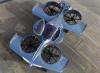 Doroni Aerospace Raises More than $60m for H1?X Development
 After 13 Years Battling Cancer, a 61-Year-Old Brazilian Man Achieved Complete Remission...
 Extraterrestrial habitats may rise via Legos of laser-fused moon dust
 Battery-only 19-seater puts China in the electric airliner race
 Dream Chaser space plane gets landing approval for debut mission in 2027
 SpaceX Just Caught Starship on Its FIRST Attempt!
 Solid-State Cells Can Make The U.S. Competitive In Batteries Again: CEO
 Jetson ONE personal eVTOL pod is about to go full sky patrol
 America's INSANE BREAKTHROUGH Could Replace Septic Tanks Forever



Chinese Company Develops $1,000 AI-Powered Laser System To Kill Mosquitoes
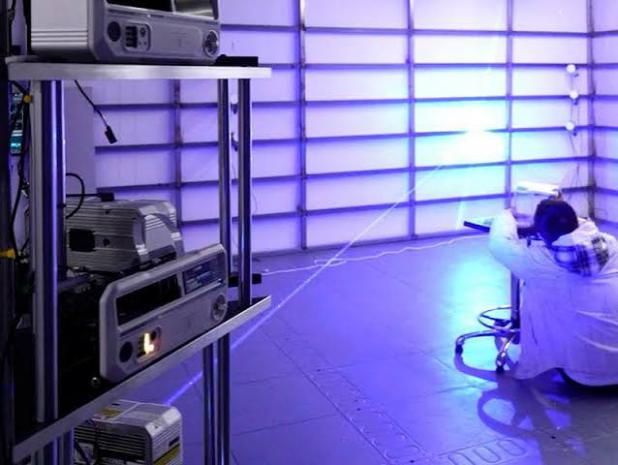
Photon Matrix, based in Changzhou, says it has already secured 5,000 prepaid orders for its Laser Mosquito Air Defense System and is preparing to begin large-scale manufacturing. The company is also working to secure regulatory clearance in China, Europe and the United States.
The machine borrows technology from autonomous vehicles, using lidar to monitor a designated area and identify tiny moving targets. It sends out 100,000 low-intensity laser pulses every second to locate insects before directing a much stronger beam at their wings.
In a recent demonstration, mosquitoes reportedly dropped from the air in rapid succession, accompanied by brief flashes of colored light. The laser destroys their ability to fly without necessarily killing them immediately. According to company founder Wang Chuan, some disabled mosquitoes can remain alive for days.
The Times writes that the biggest obstacle may be safety. The system employs a Class 4 laser powerful enough to cause serious eye injuries almost instantaneously. To reduce that danger, Photon Matrix has equipped the machine with cameras and sensors designed to recognize people, animals and potentially hazardous reflections, automatically blocking the laser when necessary.
Owners must also pass a mandatory safety quiz before they can unlock the device using fingerprint authentication.
Wang said the company originally experimented with lower-powered lasers but found them unreliable. Engineers ultimately settled on extremely brief bursts from a stronger laser, attempting to balance effectiveness against the risk of accidental exposure.
While the immediate market is mosquito control, the underlying technology could have broader applications, including systems capable of identifying and intercepting small drones.
The idea of using lasers against mosquitoes has been explored before. Intellectual Ventures demonstrated a similar concept in 2010, but it never became a commercial product. Photon Matrix is now betting that advances in AI, sensors and manufacturing can finally bring the concept to market.