










Breaking News
 Building a Sustainable Network outside of the system Is Better than Prepping for an Emergency
 We Just Got a Clue
 The Volt Returns (Via Nissan) and Just in Time
 Trump Says He's 'Highly Unlikely' To Order New Bombing Of Iran If Talks Progress
Top Tech News
 Dude turns a $23 used smartphone into the 4G brain of an RC aircraft.
 China's World-Beating Supercar Just Hit 312 MPH
 Pentagon Delivers 25,000+ Drones And Counter-Drone Systems To CENTCOM In A "Massive Surge"
 Prism puts an eye-controlled Linux computer on your face
 Remember Yesterday: AI For Today and Tomorrow
 Robot Mowers Invade America's Golf Courses, Putting Groundskeepers On Notice
 Monstrous 13-foot mecha craves the dangerous jobs humans avoid
 Scentronic tech lets you smell the internet
 Virgin Galactic's new rocket plane revives its bid for a space airline
 The metal kept moving east while the sellers ran, and Ronnie called the flush a week early



The Volt Returns (Via Nissan) and Just in Time
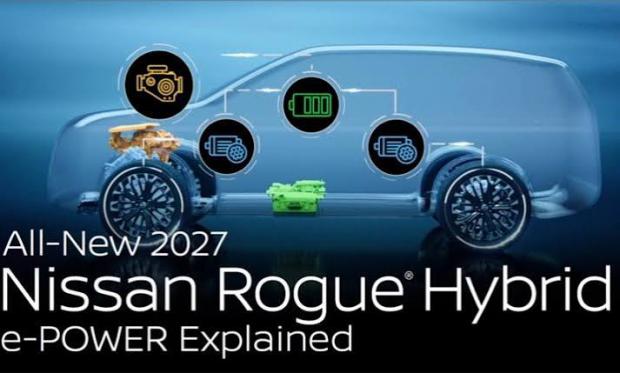
GM introduced the Volt (sold through Chevy stores) back in 2011 – fifteen years ago – which was not the right time to introduce the world's first mass-produced serial hybrid.
A serial hybrid differs from a parallel hybrid – which is pretty much what every other hybrid is – in that while there's an engine on board that burns gas, it burns gas to generate electricity, not to turn the wheels that move the vehicle. In a parallel hybrid, the engine is usually primarily and always partially responsible for moving the vehicle. It also generates electricity to charge the hybrid battery – which powers electrical accessories when the engine is not running – and there is usually an electric motor that can help move the vehicle a little bit, usually at low speeds (some plug-in hybrids have more powerful electric motors that allow all-electric driving at normal road speeds if the battery is fully charged up, but only for short distances).
Point being that with a parallel hybrid (especially if it is not a plug-in hybrid) the gas burning engine is doing what it is generally least efficient at doing, which is getting several thousand pounds moving and you'll have the driving feel of a non-hybrid car, because the engine is turning the wheels indirectly – via a transmission.
A serial hybrid like the Volt has the feel of an electric car, because it's the electric motors that are turning the wheels. The Volt's gas engine – which was effectively a generator – came on only when the battery charge got low and this often didn't happen before you got where you were headed and maybe even back. At which point you could plug it in to recharge its hybird battery pack, just like you would a fully electric car except the wait wasn't as long (because the Volt's battery pack was smaller) and also because you didn't have to. If you needed to go somewhere, just get in and go. The Volt's engine/generator automatically came on to feed electricity to the battery, which kept the electric motor(s) turning, keeping you rolling.
Since many people do not need to drive more than about 50 miles a day (this was the Volt's electric-only range) they could often go days or even weeks without burning very little or even no gas. The gas in the tank going bad after months of not being burned was a fairly common issue with these cars.
So how come it didn't catch on?