










Breaking News
 Can Humanity Survive What Just Happened In AI Without Immediate Action?
 Movies Too Loud, Then Too Quiet? Turn On This One Hidden Setting
 Josh's Soil School | PART 5 Before You Water Your Garden Again, Check This | Soil Health
 MIKE LINDELL: THE REAL NUMBERS – NEW EVIDENCE – DECLASSIFIED RECORDS...
Top Tech News
 "HOLY SH*T": Top Computer Scientist Warns AI Labs Hiding "Bombshells" That Could
 Teledroid Reaches the Space Station as Progress MS-36 Docks
 ClearSpace moves closer to launch of European space debris removal mission
 Nuclear Power Beyond Electricity with The Earthineering Company's Kevin Hickerson
 What REALLY Makes A Fence Post Strong? (Concrete VS Driven VS Foam)
 FCC greenlights SpaceX's million-strong orbital data center constellation
 Forget Fiberglass -- This NASA Insulation Boosts Your Walls by 42%
 IVERMECTIN & MEBENDAZOLE should be sold over-the-counter and available to everyone
 Meet the Frankenhamster: Scientists create bizarre 'planimal' by fusing together hamster and
 Roof-mounted solar panels turn your EV into its own charging station



ClearSpace moves closer to launch of European space debris removal mission
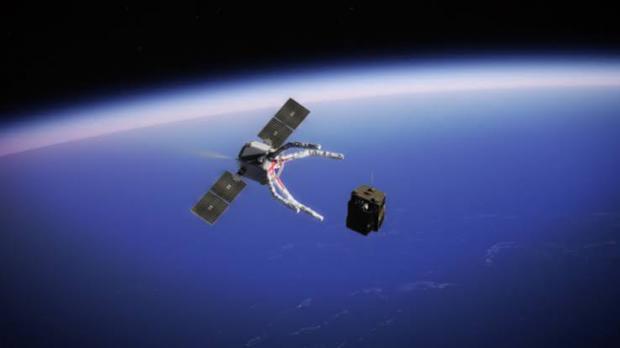
The agreement follows the formalisation of the next phase of the mission between ESA and prime contractor OHB, which leads the European industrial consortium responsible for developing and delivering ClearSpace-1.
Under the agreement, ClearSpace will continue developing the technologies needed to approach, navigate around and capture objects in orbit.
The mission is intended to demonstrate that satellites not originally designed for retrieval can be safely captured and removed from space.
Demonstrating robotic capture in orbit
ClearSpace-1 will target ESA's Proba-1 satellite, using autonomous rendezvous, close-proximity navigation and robotic capture technologies to demonstrate the removal of an unprepared object from Earth orbit.
The mission is part of ESA's wider efforts to address the growing problem of space debris, which poses risks to operational satellites and other spacecraft.
ClearSpace was originally selected as prime contractor for the mission in 2020. Although the industrial structure has since changed, the company retains responsibility for developing key rendezvous and capture capabilities.
The technologies could also support applications beyond debris removal, including satellite inspection, maintenance, life extension and end-of-life disposal.
Luc Piguet, CEO and co-founder of ClearSpace, said: "ClearSpace-1 began with a bold ambition: to demonstrate that we can take responsibility for what we leave behind in space. Today's milestone reflects years of engineering, determination and collaboration.
"We are grateful to ESA and its Member States for their continued confidence, and to OHB and our European industrial partners for bringing together the expertise needed to advance this mission.
"For ClearSpace, our focus remains on delivering the critical rendezvous and capture capabilities at the heart of ClearSpace-1.
"We are equally grateful to Omega, whose belief in our pioneering ambition since 2022 has remained constant throughout the mission's evolution. Partnerships built on this kind of trust and shared determination are what make meaningful progress possible."