









Breaking News
 Can Humanity Survive What Just Happened In AI Without Immediate Action?
 Movies Too Loud, Then Too Quiet? Turn On This One Hidden Setting
 Josh's Soil School | PART 5 Before You Water Your Garden Again, Check This | Soil Health
 MIKE LINDELL: THE REAL NUMBERS – NEW EVIDENCE – DECLASSIFIED RECORDS...
Top Tech News
 "HOLY SH*T": Top Computer Scientist Warns AI Labs Hiding "Bombshells" That Could
 Teledroid Reaches the Space Station as Progress MS-36 Docks
 ClearSpace moves closer to launch of European space debris removal mission
 Nuclear Power Beyond Electricity with The Earthineering Company's Kevin Hickerson
 What REALLY Makes A Fence Post Strong? (Concrete VS Driven VS Foam)
 FCC greenlights SpaceX's million-strong orbital data center constellation
 Forget Fiberglass -- This NASA Insulation Boosts Your Walls by 42%
 IVERMECTIN & MEBENDAZOLE should be sold over-the-counter and available to everyone
 Meet the Frankenhamster: Scientists create bizarre 'planimal' by fusing together hamster and
 Roof-mounted solar panels turn your EV into its own charging station



Nuclear Power Beyond Electricity with The Earthineering Company's Kevin Hickerson
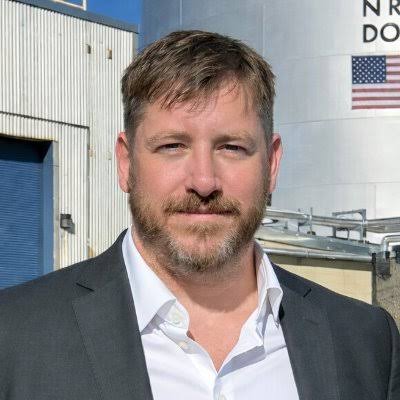
How did a nuclear physicist end up founding a reactor company?
I'm a nuclear physicist. I've been interested in the fundamental physics of the universe since I was about 5 years old. For a long time, I thought I wanted to be a string theorist, because that's what you do. But one of my teachers at Caltech told me, "You're too good at experiment. Don't make string theory your career." It was kind of the opposite of what happened to Oppenheimer. He wanted to be an experimentalist and was told to be a theorist.
In grad school, my advisor introduced me to these things called ultracold neutrons. They're the same neutrons that are in all the nuclei in the universe, except we had a way of freeing them from a nucleus and freezing them to just a few thousandths of a degree above absolute zero. I was immediately hooked, because this sounded like magic. And it kind of is.
Before that, I worked with quite a few energy startups on solar concentrators. People were really interested in powering the chemical industry with solar, but I knew there was a really huge practical problem: solar is very diffuse. The sun has a lot of energy, but it spreads it out over a very wide net.
Right now, we mostly power industry by pulling energy out of the ground, and we are going to run out. The only thing that's not going to run out is nuclear energy. As a nuclear physicist, I knew there was an exciting new way to build a nuclear reactor that could drive very high-temperature processes. The moment I realized that, I started down the path to form The Earthineering Company, to use nuclear energy to power all the things that electricity can't, which is most energy.
What does The Earthineering Company do?
Nuclear power has always made heat. You can design a nuclear reactor to be anywhere from room temperature to 100 million degrees. One of the first things we did with it was boil water to drive a turbine, and you only need about 600 degrees Celsius for that. But there's so much more you can do with it. You can drive all kinds of chemical reactions. You can melt steel and process critical minerals. You can make things we buy in the store, like shampoo.
When you see a bottle of shampoo at the grocery store, you're not looking at the price tag and thinking about how much fossil fuel was needed to drive the heat to make it. It's like an invisible sector of the energy economy, but it's where most energy is actually used.
What makes it possible is a recent innovation in advanced reactors, in particular a fuel called TRISO. It has a little silicon carbide shell around it that acts like a microscopic containment vessel. Instead of the big concrete dome you normally see outside a nuclear reactor, it puts the fuel inside that tiny little dome. That fuel can't melt down, and the same thing that makes it safe is what allows us to run it at higher temperatures. You put these things together, and you have a new type of nuclear reactor company. That's what we're doing.