










Breaking News
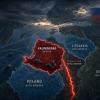 Kaliningrad May Be the World's Most Dangerous Flashpoint
 Will Trump, Xi, and Putin reshape the world order at the trilateral in China?
 NEW PAPER REVEALS HOW ANONYMOUS AGENTS ERASE YEARS OF VACCINE SAFETY AND...
 72 Straight Hours Of Major Outages Doesn't Seem Like A "Coincidence" To Me
Top Tech News
 SpaceX Just Caught Starship on Its FIRST Attempt!
 Solid-State Cells Can Make The U.S. Competitive In Batteries Again: CEO
 Jetson ONE personal eVTOL pod is about to go full sky patrol
 America's INSANE BREAKTHROUGH Could Replace Septic Tanks Forever
 Amazing DIY Building Material for Home & Yard - Inexpensive and Easy!
 Researchers have discovered a massive deposit of hidden water...
 Amazon's Ring Unveils Flying Drone And Robot To Patrol Homes And Businesses
 Anthropic Strikes $3.4 Billion Off-Grid Power Agreement to Bypass U.S. Grids, Reports Say
 The X-ray room just shrank to the size of a laptop
 Gritt and MasTec partner to bring physical AI to solar construction sites



Kaliningrad May Be the World's Most Dangerous Flashpoint
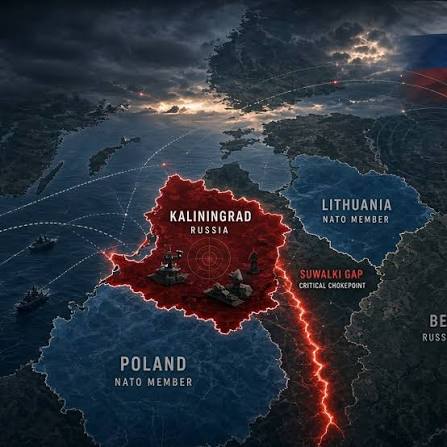
However, the souring of NATO's relations with Russia over Ukraine and other issues has created dangerous potential sites of trouble in Europe. Indeed, overall tensions in that region are at their worst point since the end of the Cold War and the dissolution of the Soviet Union in 1991.
The ongoing battle zone in Ukraine between NATO's Ukrainian proxies and Russian forces understandably attracts the most notice from neighboring countries and the outside world. But the most dangerous potential flashpoint for a full-scale NATO-Russia war is Kaliningrad, the Kremlin's heavily fortified enclave on the Baltic Sea. Although Kaliningrad has an outlet to that body of water, it is otherwise hemmed in between two NATO members, Poland to the south and Lithuania to the north and east. Both Russia and NATO conduct frequent military exercises (war games) in the vicinity, and those actions invariably cause tensions to spike.
Deutsche Welle journalist Brent Goff correctly observes that Kaliningrad's location "makes it strategically valuable to Russia, and potentially vulnerable in any direct confrontation with NATO." However, the strategic importance to Russia may outweigh Kremlin concerns about the enclave's vulnerability. Kaliningrad is the headquarters of the Russian Baltic Fleet and a base for Russian medium-range nuclear missiles and the country's most modern combat aircraft.
The persistent game of strategic "chicken" reached a new level of severity at the end of September 2026. Russian president Vladimir Putin warned that his country would use all weapons at his disposal if it considers Kaliningrad to have come under direct attack. Putin insisted that Moscow was "not threatening anyone" but was merely responding to recent statements by Western leaders that NATO was preparing for war in 2029 or 2030. It was especially significant that Russian leaders seemed to adopt a broad definition of what would constitute a direct attack. Throughout the preceding week, Russian officials had accused NATO of preparing to blockade Kaliningrad, warning that Moscow would even be prepared to use nuclear weapons if the West tried to cut off the enclave from the rest of Russia.
NATO leaders typically adopt a public stance that the Russian military presence in Kaliningrad poses an ominous threat to neighboring countries. But that theory seems far-fetched. The chance of a successful military offensive outward from the enclave is decidedly less credible than a multifront attack on the enclave from its surrounding NATO neighbors. Indeed, Western officials and anti-Russia hawks in general openly tout the Alliance's superiority of military power in the immediate region.
Anatol Lieven, director of the Eurasia Program at the Quincy Institute for Responsible Statecraft, cautions that US and other NATO leaders must take Moscow's warnings more seriously. "President Vladimir Putin and the Russian government have stated recently that if NATO blockades Kaliningrad, Russia will respond with nuclear weapons if necessary; every member of the Russian establishment with whom I have spoken has said the same. NATO Secretary General Mark Rutte, displaying the smirking, strutting frivolity that he has made his trademark, responded that he does "'not take this seriously.'"