










Breaking News
 It's All Just Weaponized Incompetence Now
 Why America Is Breaking
 Inflation Is So Bad That Fast-Food Restaurants Are Going Bankrupt
 There Is No Rogue AI: The Real Threat Is the Coming AI Patriot Act
Top Tech News
 Extraterrestrial habitats may rise via Legos of laser-fused moon dust
 Battery-only 19-seater puts China in the electric airliner race
 Dream Chaser space plane gets landing approval for debut mission in 2027
 SpaceX Just Caught Starship on Its FIRST Attempt!
 Solid-State Cells Can Make The U.S. Competitive In Batteries Again: CEO
 Jetson ONE personal eVTOL pod is about to go full sky patrol
 America's INSANE BREAKTHROUGH Could Replace Septic Tanks Forever
 Amazing DIY Building Material for Home & Yard - Inexpensive and Easy!
 Researchers have discovered a massive deposit of hidden water...
 Amazon's Ring Unveils Flying Drone And Robot To Patrol Homes And Businesses



ATF Holds 1.4 Billion Gun Records That Identify Owners by Name, GOA Tells Congress
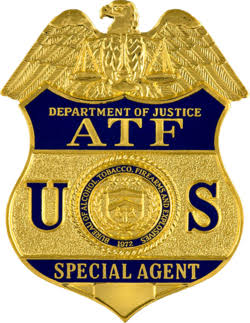
The national data bank Congressman Del Latta warned about now exists. Right now, in a record center in Martinsburg, West Virginia, the ATF holds more than 1.4 billion records that identify which Americans own which guns," he said.
The exact figure ATF confirmed to Rep. Michael Cloud is 1,414,088,513 records as of May 19, 2026. Roughly 866 million or more are already digitized—about 92 percent of the total. The pile grew from roughly 920 million in November 2021.
The system works like this. Manufacturers record which dealer receives a serialized gun. The dealer fills out Form 4473 with the buyer's full name, address, date of birth, height, weight, and race, plus the gun's make, model, and serial number. When the dealer closes, every record goes to ATF's National Tracing Center in Martinsburg. ATF scans them into its Out-of-Business Record Imaging System. Subcommittee Chairman Clay Higgins noted ATF took in about 6.8 million new records a month in fiscal 2025 and keeps them indefinitely.
The Firearm Owners' Protection Act of 1986 bars "any system of registration of firearms, firearms owners, or firearms transactions." Appropriations riders reinforce the prohibition on centralizing the records or searching them electronically by name. ATF says it complies. A spokesman told the Daily Caller the records are used only to trace crime guns by serial number, that the agency does not search by name, and that GAO and IG reports have found compliance. Higgins pointed out the name-search function is simply "turned off" and "could just as easily be turned on."
GOA's 111-page report, filed as Johnston's testimony, opens with the sentence "There is a national gun registry." The group says the files can be filtered by make, model, and type, and that enabling name search would take less than a day. Johnston told the panel the records "are searchable and they can be weaponized against law abiding gun owners for mass gun confiscation."
No ATF official testified. A retired tracing-center chief, Walfred Nelson, said in written testimony that he knows there is no firearm registry at the facility and backed shorter retention. Minority witness Gregory Jackson, a former Biden White House official on gun violence prevention, said 52 percent of traces from 2000–2023 used the out-of-business records.
The Biden administration changed the rules in 2022 so dealers keep records indefinitely instead of the prior 20-year window. ATF proposed in May to switch to a 20- or 30-year limit. GOA rejects the idea, arguing the dealer and ATF periods can stack to 60 years and that the existing files must be deleted, not merely aged out.