










Breaking News
 Gold Price Rebounds 3.9% After Steep Weekly Drop as Buyers Return
 Russian scientists quadruple speed of sodium-ion battery production...
 Bright Videos News, Nov 24, 2026 - Unleashing the Power of Universal Access to Uncensored...
 The Government Now Considers a Happy Housewife Dangerous
Top Tech News
 Roof-mounted solar panels turn your EV into its own charging station
 Russia 'is preparing to launch nuclear-armed space weapon by the end of this year'...
 Underground empire: China's plan to weaponize infrastructure gear
 $21,500 pickup plans to fix the American truck problem
 Seven Down, Three To Go: America's Microreactors Keep Going Critical
 Smart Dust
 Artificial Intelligence Could Transform Bank Runs From Hours-Long Crises...
 We Can't Put AI Back in the Box… So We Must Make It Serve Pro-Human Interests
 Dubai Just Finished the World's First Permanent Air Taxi Route: Airport to the Marina in Under 1
 After 13 Years Battling Cancer, a 61-Year-Old Brazilian Man Achieved Complete Remission...



Russian scientists quadruple speed of sodium-ion battery production...
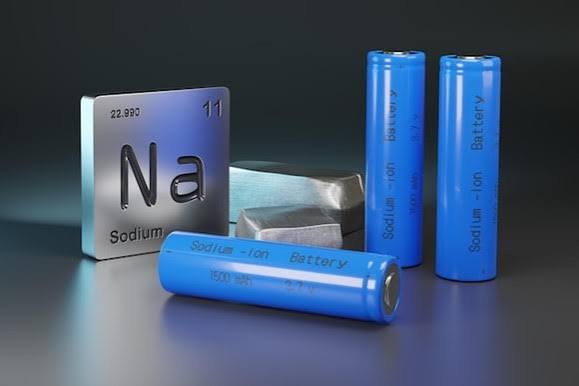
Speed breakthrough in battery manufacturing
Researchers at the National Research University of Electronic Technology (MIET) in Russia have developed a one-stage synthesis method that produces sodium-ion battery cathode material four times faster than conventional techniques, potentially accelerating the transition away from lithium-dependent energy storage.
The innovation reduces synthesis time from 24 hours to just 6 hours, addressing a critical bottleneck in sodium-ion battery production. The method grows sodium-ion crystals in water at moderate heat, reinforced by a carbon-nanotube grid structure that provides mechanical stability and electrical conductivity.
Performance metrics and cold-weather capability
The composite cathode material delivers approximately 115 milliampere-hours per gram of specific capacity with degradation rates of only 0.2% per charge-discharge cycle. This performance profile positions the material competitively against existing sodium-ion chemistries.
A distinguishing characteristic is the material's ability to maintain electrochemical function at temperatures as low as minus 20 C. The cathode fully recovers its capacity once normal operating conditions return, addressing a limitation that has hampered battery performance in cold climates.
Addressing looming lithium supply crisis
The development arrives as global lithium reserves face potential exhaustion within three decades, driven by surging demand from electric vehicles and grid storage applications. Sodium, by contrast, ranks as the sixth most abundant element on Earth and can be extracted from seawater at minimal cost.
The faster, cleaner sodium-ion cathode production method could help diversify battery supply chains away from lithium's geographic concentration. Currently, Australia, Chile and China control the majority of lithium extraction and processing capacity.
Commercial deployment underway
The Russian research complements broader industry momentum. Chinese manufacturers CBAK Energy Technology and HiTHIUM have announced sodium-ion capacity plans targeting deployment by 2027. CBAK revealed plans for 12 gigawatt-hours of annual sodium-ion production capacity, while HiTHIUM unveiled a 4-megawatt-hour sodium-ion system with a 30-year design life and 20,000-cycle battery.
In the United States, companies including Peak Energy, Alsym Energy and the Department of Energy's LENS Consortium pursue grid-storage applications for sodium-ion technology, positioning it as a complement to lithium-ion for stationary storage where energy density matters less than safety and longevity.