









Breaking News
 In Mexico, the CIA Is Playing a Dangerous Game
 Boston City Council Renames Thanksgiving the "National Day of Mourning"
 Dragged off the street and sent to war:
 Real-life Truman Show: Google wants to make a TV channel where YOU are the main character...
Top Tech News
 Roof-mounted solar panels turn your EV into its own charging station
 Russia 'is preparing to launch nuclear-armed space weapon by the end of this year'...
 Underground empire: China's plan to weaponize infrastructure gear
 $21,500 pickup plans to fix the American truck problem
 Seven Down, Three To Go: America's Microreactors Keep Going Critical
 Smart Dust
 Artificial Intelligence Could Transform Bank Runs From Hours-Long Crises...
 We Can't Put AI Back in the Box… So We Must Make It Serve Pro-Human Interests
 Dubai Just Finished the World's First Permanent Air Taxi Route: Airport to the Marina in Under 1
 After 13 Years Battling Cancer, a 61-Year-Old Brazilian Man Achieved Complete Remission...



In Mexico, the CIA Is Playing a Dangerous Game
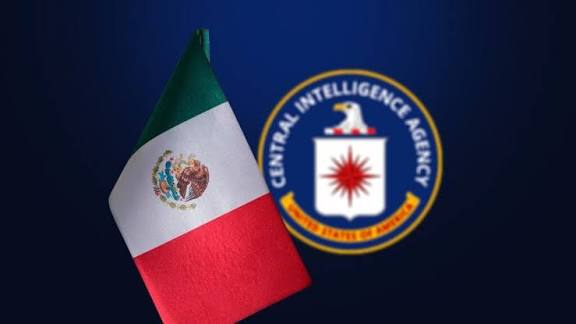
Last week, the New York Times shed new light on America's covert activities in Mexico, including the recent deaths of two CIA agents in the border state of Chihuahua. The Times' reporting shows how American intel officials built a relationship with a corrupt Mexican prosecutor, with the aim of establishing a base for counter-cartel operations. Because the Mexican government objects to U.S. spies operating in its territory, the CIA had to proceed with an extra degree of secrecy, working with state officials and other intermediaries to enable its presence south of the border.
The man at the center of the latest allegations is Guillermo Zuany Portillo, until May, Chihuahua's anti-kidnapping prosecutor. In 2025, the State Department revoked Zuany's U.S. visa over suspected cartel ties; four witnesses had previously accused the prosecutor of complicity in the 2022 murder of two police officers. Within months, however, Zuany's visa was reinstated, as he took on the informal role of local pointman for the CIA.
Zuany, per the latest Times reporting, connected U.S. intel operatives with Chihuahua state police with the aim of developing a new special forces unit. Once embedded in the police force, CIA agents helped to plan enforcement operations and identify targets for raids. They routinely participated in these missions—even providing covering fire on at least one occasion—though they were careful to always conceal their identities by wearing Chihuahua state insignia.
In April, this unit conducted its largest operation: a raid on a methamphetamine lab in the remote Sierra Madre mountains, on the border with the narco-ridden state of Sinaloa. Four CIA officers participated; during their return back, the team's convoy had to navigate winding roads through difficult terrain. One of the vehicles, carrying two CIA agents, encountered visibility issues, and plunged 300 feet into a ravine—killing all onboard.
The incident sparked a political firestorm between Mexico's left-wing president, Claudia Sheinbaum, and Chihuahua's conservative governor, Maru Campos. Sheinbaum has strongly resisted pressure from the Trump administration to allow U.S. security personnel to work in the country; moreover, Mexican law prohibits foreign agents from operating without express authorization from the federal government. And so far as can be ascertained, the roles of the deceased CIA agents were never cleared with Mexico City: one entered on a tourist visa, while the other came on a diplomatic passport.
Campos claims that she had no idea what the CIA was doing in her state, though Zuany stated otherwise in a text with the Times. In May, Campos also reportedly authorized a joint surveillance hub with five US agencies in Ciudad Juárez. While the governor has thus far avoided impeachment proceedings, her attorney general, César Jáuregui, has been arrested and charged with treason for the CIA breach. And after the latest story broke, federal and Chihuahua prosecutors issued warrants for Zuany's arrest; Zuany has since fled to the U.S. where he now is reportedly under the protection of the American government.
There is, of course, reason to believe that Sheinbaum—who has deepened security cooperation with Washington in other areas—is more aware of CIA activities in her country than she has let on. A March car bombing of suspected cartel members outside Mexico City was later revealed by anonymous intelligence officials to have been the work of the Americans, who allegedly coordinated with Mexican authorities. There are two big questions worth asking here. First, which U.S. intel operations does Mexico City know about? And second, how far is the White House willing to go on this?