










Breaking News
 Iran's mountain shelters offer Taiwan a China survival playbook
 Exposing the True Evils of the Uniparty: Soros Money, Surveillance, and the Rise of a Third Party
 18,000+ Kids Injected With Vaccines While Unconscious At Colorado Hospital
 58% Of Americans Get Their News From Four Left-Leaning Aggregators; Study Finds
Top Tech News
 Modular phone promises total privacy at the flick of a switch
 Genetically Engineered War Dogs for 134 Pound Cyborg Dire Wolves Now – Later 600 Pound Wolves
 They're Quietly REPLACING Our Food With THIS… And Nobody Is Talking About It!
 Chicago Opens First "Teacher-Free" AI School as Global Push Accelerates
 Solar Panels Are Doing Something Nobody Expected
 DeLorean climbs skyward to race electric flying cars
 Atari's 800XL returns with a keyboard, cartridges and BASIC
 Bioinspired robot airdrops into remote waters via morphing wing-sail
 Anduril interceptor adapts to emerging threats via swappable stages
 I Built a Website to Expose Solar and Battery Scams


BEAM Me Up! Prototype Space Room Could Lead to Inflatable Moon Bases
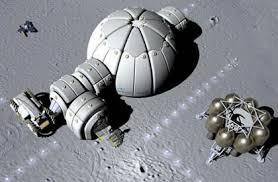
The Bigelow Expandable Activity Module (BEAM) will be folded up into the trunk of the Dragon spacecraft like a parachute that is ready to be unfurled. The station's robotic arm will remove BEAM from the trunk, attach it to the Tranquility Node, and it will expand to more than five times its total compressed size in about 45 minutes.
It doesn't take a spaceflight industry expert to start dreaming about what expandable habitats could mean for future space exploration. Why not put up a dozen space stations orbiting the Earth? Humans could use them to set up colonies on the moon or Mars. What's to stop an eccentric billionaire from starting a space hotel? Robert Bigelow, founder and head of the company that made BEAM, talked to Space.com about the company's goals for the next 20 years, and the issues that stand in the way of the company's efforts to achieve them.