










Breaking News
 Watch: Convention Crowd Symbolically Anoints JD Vance for 2028 with Chant
 Appeals Court Won't Allow Trump Admin To Implement New Rules For Mail-In Voting
 The Cooldown Is Officially LOCKED In...
 9/11: The Predatory Perps & Their Perfidious Plan
Top Tech News
 Freezable titanium plate keeps your cooler chilled way longer than ice packs
 Review: Affordable thermal device is made for discovering life outdoors
 AI Whistleblower Tells Tucker How AI Could Kill All Humans by 2040
 You Hate Flock? Well There's More...
 Will Spiking Diesel Prices Drive Autonomous Trucking?
 Chinese Concept Video Imagines the Future of Warfare
 OPTIMUS CONFIRMED: 15,000 Bots This Year -- Tesla to $3,000
 What is Going On With Robotaxi and Cybercab? Here Are All the Answers
 Floating data center would provide water and electricity to 32,000 homes
 OpenAI Cuts Off Elon's Cursor, Humanity's First Star Probe, and Trump's Nuclear Mars Shi



More technical details about China's Quantum Radar claims and quantum radar lab work
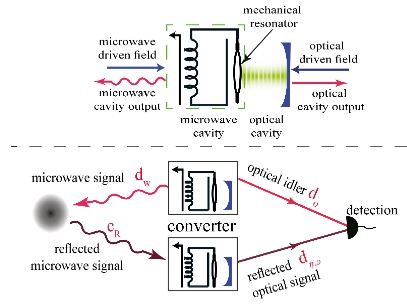
The quantum radar system was developed by the Intelligent Perception Technology Laboratory of the 14th Institute of CETC. Researchers completed experiments on quantum detection and target scattering characterization. In the target detection experiment, conducted in a real atmospheric environment, the detection ability of the system was proven to be over 100 kilometers (62 miles).
It had five times the "potential range" of a laboratory prototype jointly developed by researchers from Canada, Germany, Britain and the United States in 2015. DARPA has reportedly funded similar research and military suppliers such as Lockheed Martin are also developing quantum radar systems for combat purposes, according to media reports, but the progress of those military projects remains unknown.
According to a Sept. 8 report by Mingbao Daily, the theoretical basis of the quantum radar is that an object will change its quantum properties after receiving photonic signals. The quantum radar can easily detect stealth aircraft and is highly resistant to becoming jammed.