










Breaking News
 Amazon Boeing Plane Bursts Into Flames After it Overshoots Runway at Miami International Airpot
 Trump grants clemency to 30 people, White House pardon czar says
 Bessent: "CUT THE SNAKE'S HEAD OFF"--But Who is the Real Target?
 Special LIVE Saturday Show: Could The Gov Seize XRP After Chilling FDIC Admission? Gas Prices...
Top Tech News
 Floating data center would provide water and electricity to 32,000 homes
 OpenAI Cuts Off Elon's Cursor, Humanity's First Star Probe, and Trump's Nuclear Mars Shi
 Eating pollution? Plastic-to-cookie technology raises safety, environmental concerns
 Ford's $30,000 Fathom EV Truck Appears More Conventional Than Expected
 Berlin-based artist Simon Weckert explored that idea with Digital Camouflage...
 Tether expands tokenization business into Saudi Arabia, starting with real estate
 Ukraine is facing a new problem in its war with Russia:
 It charges more than it discharges while driving
 Dataminr AI tech to go live on NATO Maven system: CEO
  The Most Dangerous Interview Ever Recorded? PART 2


Elon will likely reveal more details on his Big Mars Colonization Rocket...
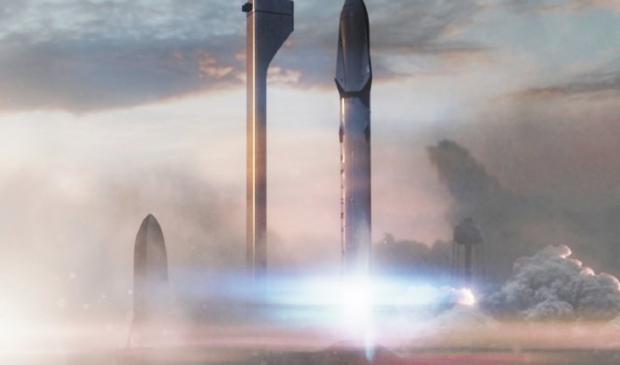
Elon Musk will likely reveal more details about the Interplanetary Transport system on the one year anniversary of the first announcement at the 2016 International Astronautical conference. IAC2017, hosted by the Space Industry Association of Australia (SIAA) will take place in Adelaide, Australia from 25 – 29 September 2017.
Zubrin was struck by many good and powerful ideas in the Musk plan. However, Musk's plan assembled some of those good ideas in an extremely suboptimal way, making the proposed system impractical. Still, with some corrections, a system using the core concepts Musk laid out could be made attractive — not just as an imaginative concept for the colonization of Mars, but as a means of meeting the nearer-at-hand challenge of enabling human expeditions to the planet.
Zubrin explains the conceptual flaws of the new SpaceX plan, showing how they can be corrected to benefit, first, the near-term goal of initiating human exploration of the Red Planet, and then, with a cost-effective base-building and settlement program, the more distant goal of future Mars colonization.