










Breaking News
 This is the future we shall bring into being
 Elon Musk's Vision For The Future Looks Like A Movie
 Phosphorus Munitions Fired by Israel Burn Groves, Orchards in Southern Lebanon
 Iran's IRGC Warns It Will Expand 'Geography of the War' If the US Attacks Again
Top Tech News
 BEYOND THE MOON: NASA plans a nuclear-powered fleet to push DEEPER into space
 Big Oil Backs Mazama's $135 Million Bet On Superhot Geothermal
 Quantum compass takes flight on Northrop's Lumberjack drone
 Terrifying AI Behavior Even Its Creators Couldn't Explain
 WW3 Near-Miss? AI Hallucinated Nuclear Weapons Components Aboard Chinese Vessel Bound For Iran
 Stripe Is Building the Toll Road for the Machine Economy
 Toyota Dakar hopeful swaps twin-turbo V6 for hydrogen fuel cells
 4-min turbo-inflatable cubic camp castle is now available in the USA
 Researchers Used Claude To Hack OpenAI Employee Accounts
 Chinese Scientists Develop New Oil Refining Method That Cuts Energy Use by 90%



Dental Surgery Robot Fits Implants Without Human Touch
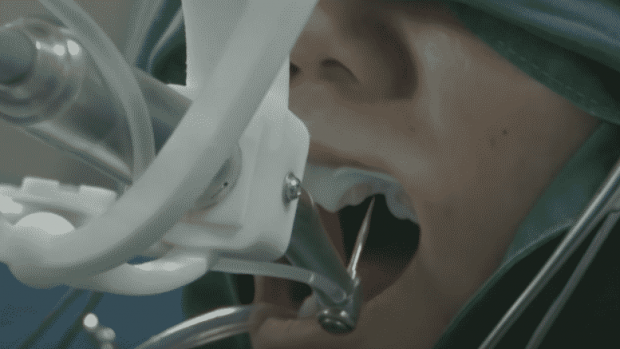
A robot dentist has carried out the first successful autonomous implant surgery by fitting two new teeth into a woman's mouth, mainland media has reported.
Although there were human medical staff present during the operation, they did not play an active role while it was being carried out.
The one-hour procedure took place in Xian, Shaanxi, on Saturday, according to Science and Technology Daily.
The implants were fitted to within a margin of error of 0.2-0.3mm, reaching the required standard for this kind of operation, experts said.
The technology was designed to overcome mainland China's shortage of qualified dentists and frequent surgical errors.
It was developed jointly by the Fourth Military Medical University's affiliated Stomatological Hospital, based in Xian, and the robot institute at Beihang University in Beijing over the past four years.
According to Dr Zhao Yimin, the mainland's leading oral rehabilitation specialist who works at the hospital, the robot combines dentists' expertise and the benefits of technology.
It conducts the surgery by itself so it can avoid faults caused by human error.