










Breaking News
 This is the future we shall bring into being
 Elon Musk's Vision For The Future Looks Like A Movie
 Phosphorus Munitions Fired by Israel Burn Groves, Orchards in Southern Lebanon
 Iran's IRGC Warns It Will Expand 'Geography of the War' If the US Attacks Again
Top Tech News
 BEYOND THE MOON: NASA plans a nuclear-powered fleet to push DEEPER into space
 Big Oil Backs Mazama's $135 Million Bet On Superhot Geothermal
 Quantum compass takes flight on Northrop's Lumberjack drone
 Terrifying AI Behavior Even Its Creators Couldn't Explain
 WW3 Near-Miss? AI Hallucinated Nuclear Weapons Components Aboard Chinese Vessel Bound For Iran
 Stripe Is Building the Toll Road for the Machine Economy
 Toyota Dakar hopeful swaps twin-turbo V6 for hydrogen fuel cells
 4-min turbo-inflatable cubic camp castle is now available in the USA
 Researchers Used Claude To Hack OpenAI Employee Accounts
 Chinese Scientists Develop New Oil Refining Method That Cuts Energy Use by 90%



Are exoskeletons the future of physical labor?
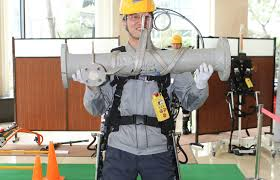
There are 3,500 people working in Ford's final assembly plant in Wayne, Michigan, where a steady stream of car husks are transformed into drivable vehicles hundreds of times a day. It's what you might imagine a car factory would be like, if you've never been to one before: it's noisy, with lots of moving parts, Hi-Lo forklifts driving by, and various audible signals playing overhead that are programmed to grab the attention of workers.
Paul Collins sticks out along the final assembly line because of the vest he's wearing. Since May of this year, Collins — who goes by "Woody" and has worked in the plant since 1995 — has been beta-testing an exoskeleton vest. He's one of four workers in the Michigan area who have been wearing the vests, which were paid for by the United Automobile Workers union, in an attempt to reduce shoulder injury.