










Breaking News
Trump's War In Iran Is Not Destroying Iran; It Is Destroying AMERICA
 NASA Chief: "We Just Built Antigravity Propulsion!"
 Carl Higbie (NEWSMAX) says LIVE on TV: "The Senate is supposed to vote on the Clarity Act NEXT
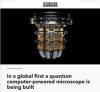 Quantum computing may soon become part of the microscope itself.
Top Tech News
Quantum computing may soon become part of the microscope itself.
 Volkswagen Just Unveiled The Most Efficient EV Ever Tested
 NASA Super Light Solar Sail Project Will Be 12-40 Times Lighter and Faster
 Space Telescope Interferometer to Image Exoplanet Continents
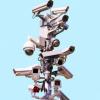 Twenty-five years of "temporary": how 9/11 built a surveillance state Americans never vote
 I'll Never Buy Another WALMART Battery!
 Shoei GT-Air 3 Smart helmet drops with built-in AR for $1,500
 AI Whistleblower Tells Tucker How AI Could Kill All Humans by 2040
 You Hate Flock? Well There's More...
 Will Spiking Diesel Prices Drive Autonomous Trucking?



Study: Prosthetic Memory System Successfully Implemented In Humans
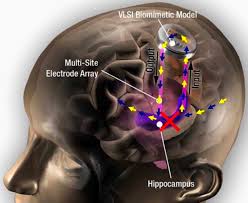
A pilot study conducted by a team of researchers from Wake Forest Baptist Medical Center and the University of Southern California successfully implemented a prosthetic memory system in a human brain.
The technology taps into an individual's natural memory patterns to strengthen the brain's ability to encode and recall information. Researchers found that the system improved a patient's short-term memory performance by nearly 40 percent. In particular, it helps with an individual's episodic memory, which is what Alzheimer's patients or those who suffer strokes and head trauma typically see weaken.