










Breaking News
 EXCERPTS: Citigroup Inc. received approval to launch a wholly-owned securities business...
 The Crown Wants It Kept Secret: AG Asks the Federal Court to Seal Information...
 The Supreme Court Just Denied Your Constitutional Rights
 The state is trying to crush the Amish with ruinous penalties.
Top Tech News
 Modular phone promises total privacy at the flick of a switch
 Genetically Engineered War Dogs for 134 Pound Cyborg Dire Wolves Now – Later 600 Pound Wolves
 They're Quietly REPLACING Our Food With THIS… And Nobody Is Talking About It!
 Chicago Opens First "Teacher-Free" AI School as Global Push Accelerates
 Solar Panels Are Doing Something Nobody Expected
 DeLorean climbs skyward to race electric flying cars
 Atari's 800XL returns with a keyboard, cartridges and BASIC
 Bioinspired robot airdrops into remote waters via morphing wing-sail
 Anduril interceptor adapts to emerging threats via swappable stages
 I Built a Website to Expose Solar and Battery Scams


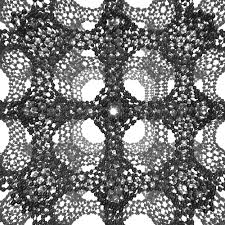
Long-sought carbon structure joins graphene, fullerene family
Date:August 13, 2018
Source:University of California - Berkeley
Summary:
Scientists have been playing with pure carbon compounds for centuries, starting with diamond and graphite and now with fullerenes, nanotubes and graphene. One type of 3D geometry has been missing, however: a negatively curved carbon-cage surface called schwarzite. Chemists have now shown that serendipitously produced materials called zeolite-templated carbons are in fact the long-sought schwarzites. Their recipe for making schwarzites could make them practical in electronics and gas storage.