










Breaking News
 The AI Bird-Flu Scenario They Just Published
 Japan's first robot ambulance works the 9-1-1 lines for humanoids
 Cheap smartphone add-on pinpoints hidden cameras to shut down spies
 The $600 Tank That Beats a $10,000 Powerwall
Top Tech News
 Terrifying AI Behavior Even Its Creators Couldn't Explain
 WW3 Near-Miss? AI Hallucinated Nuclear Weapons Components Aboard Chinese Vessel Bound For Iran
 Stripe Is Building the Toll Road for the Machine Economy
 Toyota Dakar hopeful swaps twin-turbo V6 for hydrogen fuel cells
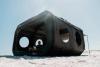 4-min turbo-inflatable cubic camp castle is now available in the USA
 Researchers Used Claude To Hack OpenAI Employee Accounts
 Chinese Scientists Develop New Oil Refining Method That Cuts Energy Use by 90%
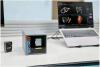 World's smallest CT scanner fits in the palm of your hand
 The Tesla Roadster will blow people's minds
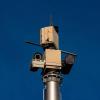 Peter Thiel-Funded Company Anduril to Triple the Number of Autonomous Surveillance Towers...



Surgeons Successfully Implant World's First 3D-Printed Rib and They Plan On Doing ...
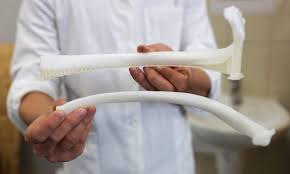
In a world first, surgeons successfully implanted a 3D-printed rib into a hospital patient.
The procedure, which was recently performed at Tokuda Hospital in Bulgaria, used an implant which was crafted out of an FDA-approved material called Nylon 680.
In addition to being drastically cheaper than titanium, the material was used to make the rib in less than 24 hours for the insignificant cost of $114.
According to 3DGence, the company that manufactured the 3D-printer used for the procedure, the material is unique because it can withstand the temperatures necessary for sterilization and it functions much more similarly to an actual rib than titanium implants.
"The patient, Ivaylo Josifov, was diagnosed with a rib deformation (and) the doctors were concerned that the deformity may progress, and decided to replace the rib with an implant," Mateusz Sidorowicz, director of marketing at 3DGence, told Digital Trends.
The physicians say that the 35-year-old patient is in "perfect health" after the procedure, and they are already planning on performing additional surgeries with the 3D-printed 'bones,' including three ribs along with a sternum.
"This is a new era in thoracic wall reconstruction for patients with tumors," says Professor Tzvetan Minchev, Head of the Cardiothoracic Surgery Department at the hospital.