










Breaking News
 Iran nuclear chief Eslami blocked from IAEA meet after US objects to travel exemption
 The Crippling Effects of Unnecessary War
 Christians for Liberty Conference, Saturday, October 17, 2026, South Lebanon, Ohio
 Roger Waters on 9/11 Lies, Zionism, and AI Music
Top Tech News
 NASA Super Light Solar Sail Project Will Be 12-40 Times Lighter and Faster
 Space Telescope Interferometer to Image Exoplanet Continents
 Twenty-five years of "temporary": how 9/11 built a surveillance state Americans never vote
 I'll Never Buy Another WALMART Battery!
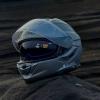 Shoei GT-Air 3 Smart helmet drops with built-in AR for $1,500
 Freezable titanium plate keeps your cooler chilled way longer than ice packs
 Review: Affordable thermal device is made for discovering life outdoors
 AI Whistleblower Tells Tucker How AI Could Kill All Humans by 2040
 You Hate Flock? Well There's More...
 Will Spiking Diesel Prices Drive Autonomous Trucking?



Elon Musk promises new Hyperloop tunnel after speed record broken
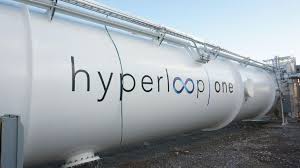
TUM Hyperloop has set a new speed record of 463 km/h (288 mph) at the fourth SpaceX Hyperloop Pod Competition. The win was announced by Hyperloop's official Twitter account. After confirming the speed record, Elon Musk announced that next year's competition will take place in a 10 km vacuum tunnel with a curve rather than the current 1 mile (1.6 km) straight above-ground tube at the SpaceX headquarters in Hawthorne, California.
Although the win was another step forward for the theoretical transportation technology, TUM only beat the previous record by 4 mph, far short of the technology's theoretical 760 mph max speed. The previous record was set by the same team (then known as WARR Hyperloop), in last year's competition.
TUM had originally hoped to hit a much higher speed of 373 mph, or roughly half the speed of sound, with a pod that doubled the power output of last year's prototype. However, Teslerati reports that the pod was forced to come to an emergency stop after it suffered visible damage. At just 1.7 meters long and weighing 70 kg, the prototype is still a fraction of the size of what the eventual passenger-ready Hyperloop pods will be.
Musk's newly proposed tunnel will be a big change for future competitions. At 10 km long it would be over five times longer than all three of the current Hyperloop test tracks, and the inclusion of a curve would bring it far closer to what Hyperloop tracks will have to be like in the real world. The new tunnel would likely introduce additional challenges for the team's competing in the competition.