










Breaking News
 OccupyTheLand WORKshop.
 Could YOU survive the apocalypse? Experts reveal the skills you'll need when the world falls...
 Ilhan Omar torches Trump over 'political intimidation' after feds raid home amid immigration
 ATF Drops Registration For Suppressors And Short-Barreled Rifles Nationwide After DOJ Declines...
Top Tech News
 Anduril's plan to save US sub edge from China's undersea surge
 Researchers Develop AI 'Mind-Reading' Tool That Reconstructs What Your Eyes See
 Video: Dexterous robot hand learns the delicate art of silk embroidery
 The computer that can read your mind:
 Seven apps. One craft
 SHOCK CASE REPORT: Advanced Alzheimer's Patient Regains Speech, Memory, Mobility...
 Most artificial limbs rely on silicone or plastic to mimic human hands.
 Flying cell tower beams phone signal to Japan from 10 miles up
 Chinese Commercial Reactor Achieves Nuclear Fusion with Clean Hydrogen-Boron Fuel
 Palmer Luckey: Autonomous Weapons Are Ancient and Why Anduril Won't Build Humanoids | EP #295



Compelling Evolutions In Electric Vehicle Technologies
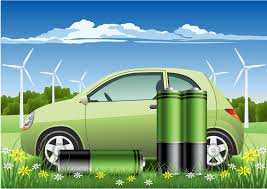
Recent high-profile demonstrations by an estimated 1.5 million students in over 100 countries echo growing levels of public concern over climate change. With the transport sector accounting for around 24% of CO2 emissions globally, car manufacturers are rising to the challenge, setting ambitious targets for carbon emissions reductions.
Global sales of electric vehicles exceeded 2 million in 2018, up from just a few thousand in 2010 and industry analysts are forecasting an acceleration of this growth, (figure 1), with electric vehicles expected to account for 57% of all passenger vehicle sales by 2040 at which time 30% of the global passenger vehicle fleet will be electric vehicles (EV).
