










Breaking News
 Trump grants clemency to 30 people, White House pardon czar says
 Bessent: "CUT THE SNAKE'S HEAD OFF"--But Who is the Real Target?
 Special LIVE Saturday Show: Could The Gov Seize XRP After Chilling FDIC Admission? Gas Prices...
 Starbase Louisiana 101: A Look At Elon's New Space City
Top Tech News
 Floating data center would provide water and electricity to 32,000 homes
 OpenAI Cuts Off Elon's Cursor, Humanity's First Star Probe, and Trump's Nuclear Mars Shi
 Eating pollution? Plastic-to-cookie technology raises safety, environmental concerns
 Ford's $30,000 Fathom EV Truck Appears More Conventional Than Expected
 Berlin-based artist Simon Weckert explored that idea with Digital Camouflage...
 Tether expands tokenization business into Saudi Arabia, starting with real estate
 Ukraine is facing a new problem in its war with Russia:
 It charges more than it discharges while driving
 Dataminr AI tech to go live on NATO Maven system: CEO
  The Most Dangerous Interview Ever Recorded? PART 2


A Hyper-Connected World With 25 Times Faster Travel Will Triple the World Economy
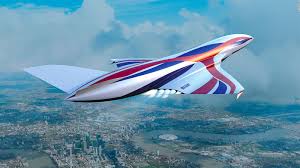
The Mars aspect of SpaceX future impact will be less important than how 25X the speed of sound travel transforms our world and has huge economic impacts.
Geoffrey West and the Sante Fe Institute performed a study of cities and found that if the size of a city doubles, then, on average, wages, wealth, the number of patents, and the number of educational and research institutions all increase by approximately the same degree, about 15 percent. They refer to this systematic phenomenon as "superlinear scaling": produces, and consumes, whether it's goods, resources, or ideas. Reusable rockets could create a global city of 9-10 billion people by 2050. This would be a "city" with ten-doublings over a ten million person city. This would be a 150% boost in per-person income.