










Breaking News
 Trump Explains Why He's Okay With North Korea Having Nukes, But Not Iran
 Hegseth Reveals "AutoWarCom" As $74 Billion Drone Splurge May Ignite This Stock
 Treasury Yield 30 Years (^TYX)
 40 Percent Error Rate Found In Afghan Refugee Vetting Samples, Inspector General Finds
Top Tech News
 Med Beds Just Took a MASSIVE Step Forward, Healing People in Days!
 Palmer Luckey: Autonomous Weapons Are Ancient and Why Anduril Won't Build Humanoids | EP #295
 A laser just photographed objects through six feet of concrete
 Elon Musk's Next-Gen Motor Destroy Entire EV Industry
 China's disputed satellite refueling heralds new space war era
 BYD Will Put Solid-State Batteries In An EV Next Year: Executive
 FDA-cleared exoskeleton puts spinal-cord patients back on their feet
 Your Robotic Vacuum Is Watching You -- Could It Someday Testify Against You in Court?
 Why Unigrid's Sodium-Ion Batteries Are the Game-Changer for Off-Grid Energy Storage
 This Battery On Wheels Makes Any Diesel Truck Electric In 5 Minutes



Bell refines its air taxi design and adds an all-electric option
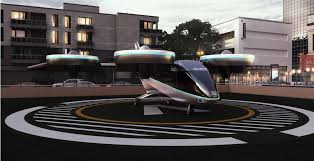
The Nexus 4EX, as the concept is now called, makes do with fewer rotors than the original and features a newly introduced all-electric mode for zero-emission travel over urban centers.
The Nexus aircraft Bell introduced at CES last year featured six tilting ducted fans that lay flat like pancakes when the vehicle was on the ground. A hybrid propulsion system featuring onboard batteries, a gas turbine and an electrical generator delivered power to six smart motors, which in turn spin the tilting propellors to lift the Nexus up and move it through the air.
Bell's redesign features just four rotors and can be configured as a hybrid-electric or all-electric aircraft, flexibility the company believes better lends the aircraft to commercial use. According to aviation news site FlightGlobal, Bell expects the Nexus 4EX to be capable of flying four to five passengers plus a pilot distances of around 100 km (62 mi) at a time, and to have a cruise speed of 241 km/h (150 mph).
"The vision for the Bell Nexus remains the same, but by taking a mature system level approach to design for an objective market vehicle, we believe this configuration unlocks a capable, certifiable and commercially viable product," says Mitch Snyder, Bell president and CEO.