










Breaking News
 Trump ARRESTS Deep State Agents, ITS HAPPENING
 What Is Another Round of Bombing in Iran Actually Going to Achieve?
 Israeli Quadcopter Drones Set Fire to Gaza Tent Camp, Displacing 800 Palestinians
 CNN: US Forces Ready To Launch Major Attacks Against Iran Within 96 Hours of Receiving...
Top Tech News
 $10k EV hatch packs in 5-minute flash charging
 Apex Recordhunter electric drone sets unofficial speed record
 Space-age manna: USAF & SpaceX drop survival kit from orbit
 World's first nuclear fusion power plant coming to WA | FOX 13 Seattle
 Advanced Small Modular Reactors (SMRs)
 A U.S. energy startup has demonstrated a new type of nuclear reactor that uses existing nuclear...
 BREAKING: NIH-FUNDED MAD SCIENTISTS HAVE CREATED A HUMANOID ROBOT CONTROLLED...
 Modular phone promises total privacy at the flick of a switch
 Genetically Engineered War Dogs for 134 Pound Cyborg Dire Wolves Now – Later 600 Pound Wolves
 They're Quietly REPLACING Our Food With THIS… And Nobody Is Talking About It!



New silicon/perovskite solar cell world record nears 30% efficiency
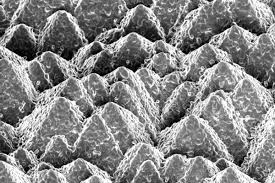
Ever since perovskite burst onto the solar cell scene around a decade ago, it's broken efficiency records at a blistering pace – especially when it's paired with silicon. Just five years ago, tandem solar cells had a maximum efficiency of 13.7 percent, two years ago it was up to 25.2 percent, and earlier this year the tech hit 27.7 percent.
Now, a team led by scientists at Helmholtz-Zentrum Berlin (HZB) have managed to squeeze an impressive 29.15 percent efficiency out of their tandem silicon-perovskite solar cell. That's approaching the milestone 30 percent mark, and not too far off the theoretical limit of 35 percent.