










Breaking News
 153 Nations Adopt UN Pandemic Declaration to Push FAST-TRACKED Vaccines Within 100 Days...
 Regarding the Claim That "Viruses Don't Exist!"
 The Fraud That Launched the mRNA Era
 U.S. Bankruptcy Filings Rise 11% in First Nine Months of 2026
Top Tech News
 Anduril's plan to save US sub edge from China's undersea surge
 Researchers Develop AI 'Mind-Reading' Tool That Reconstructs What Your Eyes See
 Video: Dexterous robot hand learns the delicate art of silk embroidery
 The computer that can read your mind:
 Seven apps. One craft
 SHOCK CASE REPORT: Advanced Alzheimer's Patient Regains Speech, Memory, Mobility...
 Most artificial limbs rely on silicone or plastic to mimic human hands.
 Flying cell tower beams phone signal to Japan from 10 miles up
 Chinese Commercial Reactor Achieves Nuclear Fusion with Clean Hydrogen-Boron Fuel
 Palmer Luckey: Autonomous Weapons Are Ancient and Why Anduril Won't Build Humanoids | EP #295



We've wiretapped the gut-brain hotline to decode signals driving disease
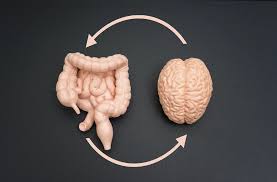
Researchers from the University of Cambridge and Dartmouth College developed a device thinner than a human hair designed to sit between colon layers unnoticed, capturing signals sent up to the brain and pulses it received in return. This crucial information pathway makes up the enteric nervous system (ENS), an often overlooked branch compared with the sympathetic nervous system and parasympathetic nervous system. The ENS, with up to 600 million neurons – made up of 20 different types of these nerve cells – is the gatekeeper of the gastrointestinal tract, involved in all its complex processes and movements, and plays a key role when things go wrong.
"Because the ENS neural activity is 'dampened' down under anaesthesia, the ability to record in awake animals is crucial, as it allows recording of the ENS while the animal experiences stress or during and after eating," explained lead researcher Róisín Owens, from Cambridge's Department of Chemical Engineering and Biotechnology. "This new technology will build a better understanding how the gut and brain communicate, and it could lead to new treatments for digestive and neurological disorders."