










Breaking News
 The TERRIFYING Reason Peter Thiel Escaped the US
 Professor Jiang Breaks Down the Greater Israel Project
 Edward Snowden on Palestine and Sam Altman
 Palantir. IT'S WORSE Than You Think
Top Tech News
 Solar Panels Are Doing Something Nobody Expected
 DeLorean climbs skyward to race electric flying cars
 Atari's 800XL returns with a keyboard, cartridges and BASIC
 Bioinspired robot airdrops into remote waters via morphing wing-sail
 Anduril interceptor adapts to emerging threats via swappable stages
 I Built a Website to Expose Solar and Battery Scams
 Whistleblower Issues Dire Warning: Rogue AI, Hacking Nuclear Programs...
 Multi-material insulation delivers up to 10,000 x the stiffness
 Anduril's plan to save US sub edge from China's undersea surge
 Researchers Develop AI 'Mind-Reading' Tool That Reconstructs What Your Eyes See



What to Do When Things Are Not Going Well in Your Garden
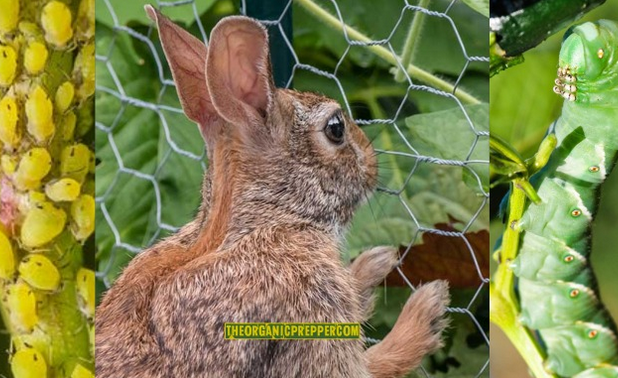
So, things are not going well in your garden and you aren't quite sure what to do. Maybe the plants aren't growing, or the fruits have problems, and production seems low. The first step towards a correct resolution involves pinpointing the exact problem, consisting of a bit of detective work.
Environmental Conditions
How's the weather? Wet conditions, whether hot or cold, are very conducive to disease. Disease can be bacterial, fungal, or viral. Different diseases will require different solutions.
What's the date? Pests such as squash vine borers have a specific life cycle. (To avoid the problem, plant when the vine borer isn't laying eggs.) Get help with dates, garden planning and more at Seeds for Generations.
It wouldn't hurt to test your soil pH because if the soil is too acidic or basic, the plant won't take up the nutrients. Commercial chemical tests are quick and easy. Be aware that these aren't as accurate as lab testing but will get you a good ballpark figure.