










Breaking News
 The Deep State's Get-Out-Of-Jail-Free Card
Why Not Stop Mass Immigration into the United States?
 French President Macron's Popularity Falls to Record Low of 16 Per Cent
 Top Signs You're Heading for a Quagmire
Top Tech News
 NASA Super Light Solar Sail Project Will Be 12-40 Times Lighter and Faster
 Space Telescope Interferometer to Image Exoplanet Continents
 Twenty-five years of "temporary": how 9/11 built a surveillance state Americans never vote
 I'll Never Buy Another WALMART Battery!
 Shoei GT-Air 3 Smart helmet drops with built-in AR for $1,500
 Freezable titanium plate keeps your cooler chilled way longer than ice packs
 Review: Affordable thermal device is made for discovering life outdoors
 AI Whistleblower Tells Tucker How AI Could Kill All Humans by 2040
 You Hate Flock? Well There's More...
 Will Spiking Diesel Prices Drive Autonomous Trucking?



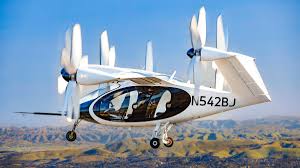
Joby S4 makes historic piloted tilt-rotor eVTOL transition flight
The race to place the first passenger-carrying eVTOL into regular taxi service has been a mixed bag in recent years. On the one hand, the technology has been maturing, but on the other companies once thought to be front runners are falling by the wayside as backers become impatient after pouring hundreds of millions of dollars into projects with no visible return on their investment.
One ray of optimism is Joby's S4 prototype, which now looks to be on the road to FAA certification. The all-electric, six-rotor eVTOL aircraft that takes off and lands like a helicopter and flies forward like a fixed-wing aircraft has been under development by the California-based aerospace company since it was founded in 2009. With a top speed of 174 knots (200 mph, 322 km/h), a range of up to 130 nautical miles (150 miles, 241 km), and an operational ceiling of 15,000 ft (5,000 m), the prototype has been making uncrewed test flights since 2017, clocking up 40,000 miles (64,000 km) in the air.
Last Tuesday this was topped when Joby Chief Test Pilot James "Buddy" Denham took the controls of the S4 at Joby's flight test facility in Marina, California and flew it from vertical takeoff to horizontal flight to vertical landing.
This is not the first time that an eVTOL has made such a transition flight with a pilot aboard, but the others by the likes of Beta Technologies and Wick Aero used aircraft with separate horizontal and vertical flight systems, while the S4 used a tilt-rotor system for both maneuvers.
Already under evaluation by the US Air Force, the S4 is now seeking FAA approval with an eye toward beginning commercial operations in Dubai later this year. Since the April 22 flight, the aircraft has made multiple tests with three different pilots at the controls.
"Achieving this milestone is hugely significant for Joby," said Didier Papadopolous, President of Aircraft OEM at Joby. "It not only demonstrates the high level of confidence we have in the performance of the aircraft as we prepare for commercial service in Dubai, it also paves the way to starting TIA flight testing with FAA pilots onboard.
"We have taken a very methodical approach to achieving this long-planned milestone, with an immense amount of testing, both in the air and on the ground, helping form a solid foundation that allowed us to move from one historic flight to routine pilot-on-board transitions almost overnight."