










Breaking News
 US Military Ends 72-Year Mandatory Flu Shot Policy
 3 Million Ounces of Gold and 28 Million Ounces of Silver Taken Out the Back Door
 Palantir and the New Order
 Hear from a Missouri farmer: Blake Hurst shares that rising input costs, among other pressures...
Top Tech News
 Researcher wins 1 bitcoin bounty for 'largest quantum attack' on underlying tech
 Interceptor-Drone Arms-Race Emerges
 A startup called Inversion has introduced Arc, a space-based vehicle...
 Mining companies are using cosmic rays to find critical minerals
 They regrew a severed nerve - by shortening a bone.
 New Robot Ants Work Like Real Insects To Build And Dismantle On Their Own
 Russian scientists 'are developing the world's first drug to delay ageing' months after
 Sam Altman's World ID Expands Biometric Identity Checks
 China Tests Directed Energy Beam That Recharges Drones Mid-Flight
 Jurassic Park might arrive sooner than expected, just with Dinobots.



Blast Them: A Rutgers Scientist Uses Lasers to Kill Weeds
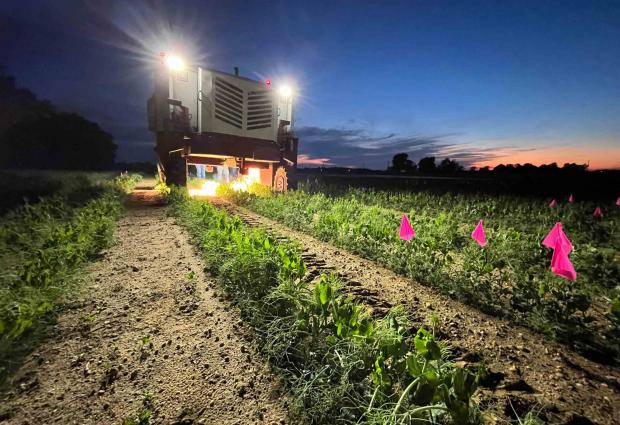
Imagine a tractor-size machine that can tell the difference between a vegetable and a weed – and then zaps the unwelcome plant with a laser.
It's not science fiction. It's being tested in New Jersey by Rutgers University scientist Thierry Besançon.
An associate professor with the Department of Plant Biology in the School of Environmental and Biological Sciences, Besançon recently collaborated on field trials of the high-tech device that uses artificial intelligence and lasers to kill weeds without using chemicals.
"It's pure physics," he said. "There's no herbicide involved. It's just light energy targeting the weeds."