










Breaking News
 Planned Muslim mega city in the heart of Texas wins huge victory and gets a step closer...
 Donald Trump Jr in talks to host Apprentice reboot
 The longest solar eclipse of the century is coming: Day will turn into night and it won't return
US Economy Expands at 2.0 Percent in 2026 Q1, a Look at the Numbers
Top Tech News
 Researcher wins 1 bitcoin bounty for 'largest quantum attack' on underlying tech
 Interceptor-Drone Arms-Race Emerges
 A startup called Inversion has introduced Arc, a space-based vehicle...
 Mining companies are using cosmic rays to find critical minerals
 They regrew a severed nerve - by shortening a bone.
 New Robot Ants Work Like Real Insects To Build And Dismantle On Their Own
 Russian scientists 'are developing the world's first drug to delay ageing' months after
 Sam Altman's World ID Expands Biometric Identity Checks
 China Tests Directed Energy Beam That Recharges Drones Mid-Flight
 Jurassic Park might arrive sooner than expected, just with Dinobots.



US particle accelerators turn nuclear waste into electricity, cut radioactive life by 99.7%
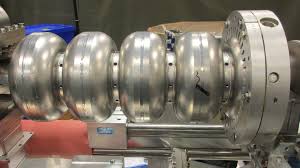
Researchers at the DOE's Thomas Jefferson National Accelerator Facility are advancing two high-stakes projects aimed at optimizing Accelerator-Driven Systems (ADS).
The initiative focuses on a dual-purpose breakthrough: generating additional carbon-free electricity from spent nuclear fuel while drastically reducing its radioactive lifespan.
The projects are supported by $8.17 million in grants from the Department of Energy's NEWTON (Nuclear Energy Waste Transmutation Optimized Now) program and represent a shift from treating used nuclear fuel as a permanent liability to viewing it as a recyclable fuel source.
The researchers are developing ADS technology. This system uses a particle accelerator to fire high-energy protons at a target (such as liquid mercury), triggering a process called "spallation." This releases a flood of neutrons that interact with unwanted, long-lived isotopes in nuclear waste.
The technology can effectively "burn" the most hazardous components of the waste by transmuting these elements. While unprocessed fuel remains dangerous for approximately 100,000 years, partitioning and recycling via ADS can reduce that window to just 300 years.
Enhancing accelerator efficiency for economic viability
The process also generates significant heat, which can be harnessed to produce additional electricity for the grid.
"Instead of having a lifetime of 100,000 years in storage, for example, you can shorten the storage years down to 300," said Rongli Geng, head of SRF Science & Technology at Jefferson Lab and principal investigator for both projects.
To make ADS economically viability, Jefferson Lab is tackling two primary technical hurdles: efficiency and power.
Traditional particle accelerators require massive, expensive cryogenic cooling systems to reach superconducting temperatures. Jefferson Lab is pioneering a more cost-effective approach by coating the interior of pure niobium cavities with tin.
These niobium-tin cavities can operate at higher temperatures, allowing for the use of standard commercial cooling units rather than custom, large-scale cryogenic plants. The team is also developing spoke cavities, which is a complex design intended to drive even higher efficiency in neutron spallation.
Implementing high-power magnetrons
The second project focuses on the power source behind the beam. Researchers are adapting the magnetron—the same component that powers microwave ovens—to provide the 10 megawatts of power required for ADS.
The primary challenge is that the energy frequency must match the accelerator cavity precisely at 805 Megahertz. In collaboration with Stellant Systems, researchers are prototyping advanced magnetrons that can be combined to reach the necessary high-power thresholds with maximum efficiency.