










Breaking News
 New Study Says Grain Beats Grass: Joel Salatin Responds
 Stop Paying for Concrete - This Japanese Method Turns Plain Sand Into Solid Stone
 Solar Panels Plus Farming? Agrivoltaics Explained
 Cool knot techniques
Top Tech News
 I Built a Website to Expose Solar and Battery Scams
 Whistleblower Issues Dire Warning: Rogue AI, Hacking Nuclear Programs...
 Multi-material insulation delivers up to 10,000 x the stiffness
 Anduril's plan to save US sub edge from China's undersea surge
 Researchers Develop AI 'Mind-Reading' Tool That Reconstructs What Your Eyes See
 Video: Dexterous robot hand learns the delicate art of silk embroidery
 The computer that can read your mind:
 Seven apps. One craft
 SHOCK CASE REPORT: Advanced Alzheimer's Patient Regains Speech, Memory, Mobility...
 Most artificial limbs rely on silicone or plastic to mimic human hands.



DARPA chooses two to develop insect-size robots for complex jobs like disaster relief...
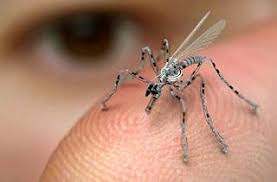
ARLINGTON, Va. – U.S. military researchers have chosen two organizations to develop enabling technologies for insect-size robots able to perform complex jobs like disaster relief or inspecting hazardous environments that are inaccessible to larger robots.
Officials of the U.S. Defense Advanced Research Projects Agency (DARPA) in Arlington, Va., have awarded two contracts over the past two weeks for the SHort-Range Independent Microrobotic Platforms (SHRIMP) project.
SHRIMP, sponsored by the DARPA Microsystems Technology Office, is developing new actuators, multi-mode power for future untethered insect-scale robots -- also called micro-to-milli robotic platforms.