










Breaking News
 The Deep State's Get-Out-Of-Jail-Free Card
Why Not Stop Mass Immigration into the United States?
 French President Macron's Popularity Falls to Record Low of 16 Per Cent
 Top Signs You're Heading for a Quagmire
Top Tech News
 NASA Super Light Solar Sail Project Will Be 12-40 Times Lighter and Faster
 Space Telescope Interferometer to Image Exoplanet Continents
 Twenty-five years of "temporary": how 9/11 built a surveillance state Americans never vote
 I'll Never Buy Another WALMART Battery!
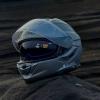 Shoei GT-Air 3 Smart helmet drops with built-in AR for $1,500
 Freezable titanium plate keeps your cooler chilled way longer than ice packs
 Review: Affordable thermal device is made for discovering life outdoors
 AI Whistleblower Tells Tucker How AI Could Kill All Humans by 2040
 You Hate Flock? Well There's More...
 Will Spiking Diesel Prices Drive Autonomous Trucking?



1,600-hp three-seat eVTOL promises jet-setters 500 miles at 220 mph
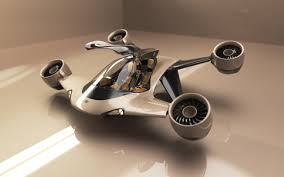
It plans to offer a powerful personal hybrid-electric aircraft that will seat three people, deliver 510 miles (821 km) of range, and hit cruise speeds up of to 220 mph (354 km/h) – all while making 80% less noise than a helicopter.
Those are some fighting words, especially when you consider that these figures are higher than what most other eVTOL makers have claimed so far – and the fact that all AltoVolo has to show at the moment is 3D renders of its Sigma aircraft, albeit rather pretty ones.
For comparison, Archer Aviation's Midnight electric air taxi, which has jumped through several regulatory hoops in the US recently, tops out at 150 mph (241 km/h) and 100 miles on a charge. Joby's hydrogen fuel cell demonstrator is perhaps a closer competitor: it pulled off a 523-mile (842-km) flight last year, and can hit a max speed of 200 mph (322 km/h).
It's worth noting that these flying machines are being built for different use cases, though. While Joby and Archer have their sights set on the air taxi market – meaning rapid back-to-back flights and quick recharges in between – AltoVolo's Sigma could rival private helicopters that operate in residential areas with its range and quiet operation.
The Sigma is an undoubtedly bold vision, from the design to its dimensions. AltoVolo says it will measure just 15.7 ft (4.8 m) wide (about the same as a double garage door), feature a 1,608-hp powertrain capable of operating even when one jet fails, and weigh just 2,160 lb (980 kg) inclusive of three passengers, or about the same as the incredibly fast Gordon Murray T.50 hypercar. That's all kinds of bonkers.
AltoVolo says it's "combined a patent-pending tilting electric jet design and integrated aerodynamics, to leverage the high burst capability of batteries for vertical take-off and landing, and the energy density of liquid fuel for long range flight."
That's all well and good, but as we've learned from covering eVTOL companies over the last few years, getting such projects off the ground is not easy by any measure. So while AltoVolo says it's had its design and engineering validated by an experienced aerospace engineer and integrated autonomous flight tech from veteran control systems firm Embention, I couldn't find much about its founder Will Wood's background online. So the proof will mostly be in the pudding.