










Breaking News
 Egypt's parliament authorises Sisi to take 'all necessary measures' to bolster...
 60,000 Microsoft Workers Offered Buyouts As AI Spending Boom Reshapes Workforce
 Netanyahu Says Iran May Try To Disrupt Israeli Election With Attacks
 Trump Fires Another Salvo Into Israeli Politics As Netanyahu Neck-and-Neck With Gadi Eisenkot
Top Tech News
 Modular phone promises total privacy at the flick of a switch
 Genetically Engineered War Dogs for 134 Pound Cyborg Dire Wolves Now – Later 600 Pound Wolves
 They're Quietly REPLACING Our Food With THIS… And Nobody Is Talking About It!
 Chicago Opens First "Teacher-Free" AI School as Global Push Accelerates
 Solar Panels Are Doing Something Nobody Expected
 DeLorean climbs skyward to race electric flying cars
 Atari's 800XL returns with a keyboard, cartridges and BASIC
 Bioinspired robot airdrops into remote waters via morphing wing-sail
 Anduril interceptor adapts to emerging threats via swappable stages
 I Built a Website to Expose Solar and Battery Scams


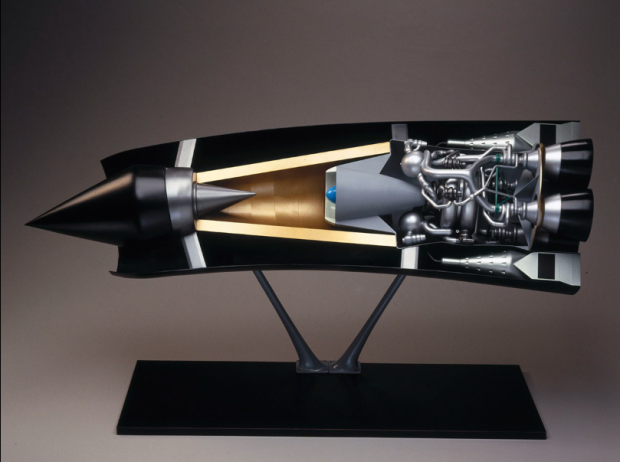
Hypersonic SABRE engine reignited in Invictus Mach 5 spaceplane
Sometimes you have to admire sheer perseverance when it comes to technological innovations.
In 1982, British Aerospace and Rolls-Royce teamed up to develop the Horizontal Take-Off and Landing (HOTOL) spaceplane that was intended to be a single-stage-to-orbit vehicle that could take off and land from a conventional runway and could breathe air for most of its flight to drastically cut down on weight.
The program generated a lot of enthusiasm in aerospace circles and a model was proudly displayed in the Science Museum in London. It even garnered a lot of official support from the British government. However, by 1987, Whitehall decided that the project was "over ambitious" and withdrew funding.
But that didn't stop Alan Bond, John Scott-Scott, and Richard Varvill from going private in 1989 and forming their own company, Reaction Engines Limited, to keep the idea alive and develop the key technologies of HOTOL in a new incarnation.
Concentrating on the company's SABRE technology as well as side projects to attract revenue and investments, Reaction Engines kept going until 2024 thanks to British and American government contracts and heavy investment by BAE Systems. But a cash-flow crisis forced the company into administration and it was broken up.
Now, a group of companies led by Frazer-Nash and including Spirit AeroSystems, Cranfield University, and a number of small-medium enterprises has launched the Invictus program that aims to develop a Mach 5 spaceplane by early 2031 that operates on the edge of space – and which may one day lead to an orbital launch system.
The key to this is an engine that can swap between different modes – sometimes operating like a jet, sometimes like a rocket. On takeoff, the Invictus would take off from a conventional runway like a conventional plane as its engine breathes air to burn its liquid hydrogen fuel, which saves an enormous amount of weight since no on-board oxygen is needed during this phase. As the aircraft approaches the edge of space, it reconfigures itself into a rocket and uses liquid oxygen, though much less than a conventional launcher would.
At the heart of Invictus is the pre-cooler system for the SABRE engine. In a jet engine flying at hypersonic speeds, the incoming air is compressed and heats to a temperature that would quickly melt and destroy any material the engine might be made of. To prevent this, the engine's hydrogen fuel runs through a heat exchanger to chill a liquid helium coolant that flows through a complex network of small tubes in the air inlet. These cool the incoming air from over 1,000 °C (1,832 °F) to ambient temperature in less than 1/20th of a second. The cooled air is then mixed with liquid hydrogen and ignited.