










Breaking News
 Americans Worry Most Among Developed Nations About Food Security
 Pro-Israel Forces Intensify Effort To Control American Discourse
 Trump's 3 Choices In Ukraine (A Win-Win-Win For Russia)
 Climate Groups Falter, Bill Gates Recalibrates, But Al Gore Soldiers On
Top Tech News
 Build a Greenhouse HEATER that Lasts 10-15 DAYS!
 Look at the genius idea he came up with using this tank that nobody wanted
 Latest Comet 3I Atlas Anomolies Like the Impossible 600,000 Mile Long Sunward Tail
 Tesla Just Opened Its Biggest Supercharger Station Ever--And It's Powered By Solar And Batteries
 Your body already knows how to regrow limbs. We just haven't figured out how to turn it on yet.
 We've wiretapped the gut-brain hotline to decode signals driving disease
 3D-printable concrete alternative hardens in three days, not four weeks
 Could satellite-beaming planes and airships make SpaceX's Starlink obsolete?
 First totally synthetic human brain model has been realized
 Mach-23 potato gun to shoot satellites into space


New National Security Strategy: A Stunning Departure, Yet Full of Contradictions
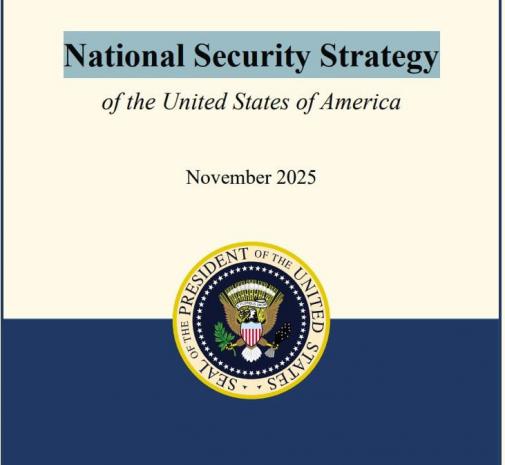
The document clearly establishes this as the U.S.'s number one priority, saying that the U.S. will now "assert and enforce a 'Trump Corollary' to the Monroe Doctrine."
In terms of military presence, they write that this means "a readjustment of our global military presence to address urgent threats in our Hemisphere, and away from theaters whose relative import to American national security has declined in recent decades or years."
On China, a couple of points.
The most striking aspect to me is that China is NOT anymore defined as "the" primary threat, "most consequential challenge," "pacing threat," or similar formulations used in previous such documents.
It's clearly downgraded as a priority. Based on the document's structure and emphasis, the top U.S. priorities could be characterized as:
1) Homeland security and borders (migration, cartels, etc.)
2) Western Hemisphere (Monroe Doctrine restoration)
3) Economic security (reindustrialization, supply chains)
4) China and Indo-Pacific
To be clear they don't define China as an ally or a partner in any shape or form but primarily as
1) an economic competitor;
2) a source of supply chain vulnerabilities (but also a trading partner); and
3) a player who regional dominance should be "ideally" denied because it "has major implications for the U.S. economy."
Interestingly, I believe for the first time ever, they mention the possibility of being overmatched militarily by China:
– They write that "deterring a conflict over Taiwan, ideally by preserving military overmatch, is a priority": "ideally" clearly means that it's ideal, but not necessarily a given. The fact that they call deterring conflict over Taiwan merely "a priority" also suggests, by definition, that it's no more a top strategic priority, or a vital interest.
– On Taiwan they also clearly imply that if the U.S.'s "First Island Chain allies" don't "step up and spend – and more importantly do – much more for collective defense," then there might be "a balance of forces so unfavorable to us as to make defending that island impossible."
They still maintain that "the United States does not support any unilateral change to the status quo in the Taiwan Strait" but, clearly, there's a widening gap between what the US says it opposes and what it's actually willing to do about it.
Interestingly as well, contrary to previous such document, there is zero ideological dimension in the document when it comes to China. No "democracy vs. autocracy" framing, no "rules-based international order" to defend, no values-based crusade. China is treated as a practical issue to be managed, not an ideological adversary to be defeated.