










Breaking News
 Silver's Hidden Stage 5: Why the Next Crash Will Make 1980 Look Like a Warm-Up
 Sunday Live: Elon Musk Calls For The Unelected Openly Tyrannical EU To Be Abolished,...
 New architect feature! - BrightLearn UPDATE for Dec 8, 2025
 Trump and Putin Stunned the World. Europe Faces "Civilizational Erasure" Within 20 Years..
Top Tech News
 Build a Greenhouse HEATER that Lasts 10-15 DAYS!
 Look at the genius idea he came up with using this tank that nobody wanted
 Latest Comet 3I Atlas Anomolies Like the Impossible 600,000 Mile Long Sunward Tail
 Tesla Just Opened Its Biggest Supercharger Station Ever--And It's Powered By Solar And Batteries
 Your body already knows how to regrow limbs. We just haven't figured out how to turn it on yet.
 We've wiretapped the gut-brain hotline to decode signals driving disease
 3D-printable concrete alternative hardens in three days, not four weeks
 Could satellite-beaming planes and airships make SpaceX's Starlink obsolete?
 First totally synthetic human brain model has been realized
 Mach-23 potato gun to shoot satellites into space


How to Stay Warm During a Winter Power Outage
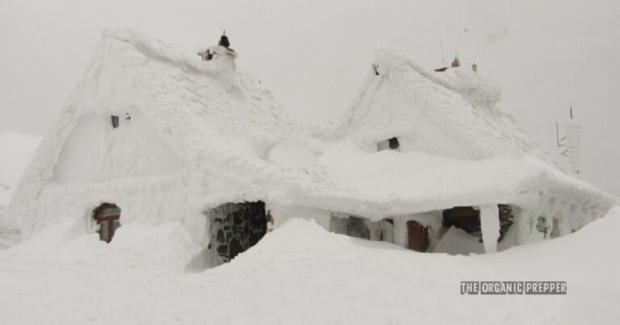
Depending on where you live, a winter power outage can quickly become a life-threatening emergency.
Winter storms with heavy snowfalls, high winds, and a coating of ice are a threat to our vulnerable power grid. Making winter even more of a threat recently is the current economic upheaval. In economically depressed places, many residents have had their utilities shut off due to an inability to pay their bills. With temperatures in the negatives, people could quite literally freeze to death in their homes. You don't have to be a prepper to realize that secondary heating systems, specialized skills, and a frigid-weather plan could be vital to your survival in the winter.
Are you prepared for a winter power outage?
No matter how you heat your home, it's vital to have a backup method. Even if you have a non-grid reliant method as your primary heat source, things can happen. Chimney fires occur, wood gets wet, furnaces of all types malfunction…while these scenarios could be unlikely, you have to remember, "Two is one, one is none."
Here are some options for heat that doesn't come from a thermostat on the wall.
• Wood Heat: Everyone's favorite off-grid heating method is a fireplace or woodstove. The fuel is renewable and you have the added bonus of an off-grid cooking method. Unfortunately, if your home doesn't already have one, it can be a pretty expensive thing to install. If you rent, it's probably not going to be an option at all to add wood heat to someone else's property. If you have wood heat, make sure you have a good supply of seasoned firewood that is well-protected from the elements.
• Propane Heaters: There are several propane heaters on the market that do not require electricity. I own a Little Buddy heater


• Kerosene/Oil Heaters: Kerosene heaters burn a wick for heat, fuelled by the addition of heating oil. These heaters really throw out the warmth. A brand new convectihttps://amzn.to/48mY0eIon kerosene heater like this one 
• Natural Gas Fireplaces: Some gas-fueled fireplaces will work when the electrical power goes out – they just won't blow out heat via the fan.
• Pellet Stove: Most pellet stoves require electricity to run, but there are a few of these high-efficiency beauties with 40 hours of backup power when the electricity goes out
What if you don't have a secondary heating method?