










Breaking News
 Tulsi's Assessment That Putin Doesn't Want To Conquer All of Ukraine Is Absolutely Correct
 Google AI Lead Shane Legg Defines Levels of AGI and Superintelligence and How to Test for...
 EngineAI T800: Born to Disrupt! #EngineAI #robotics #newtechnology #newproduct
 Tuesday War Room LIVE: Trump Mentioned in ANOTHER Big Batch of Epstein Files...
Top Tech News
 Travel gadget promises to dry and iron your clothes – totally hands-free
 Perfect Aircrete, Kitchen Ingredients.
 Futuristic pixel-raising display lets you feel what's onscreen
 Cutting-Edge Facility Generates Pure Water and Hydrogen Fuel from Seawater for Mere Pennies
 This tiny dev board is packed with features for ambitious makers
 Scientists Discover Gel to Regrow Tooth Enamel
 Vitamin C and Dandelion Root Killing Cancer Cells -- as Former CDC Director Calls for COVID-19...
 Galactic Brain: US firm plans space-based data centers, power grid to challenge China
 A microbial cleanup for glyphosate just earned a patent. Here's why that matters
 Japan Breaks Internet Speed Record with 5 Million Times Faster Data Transfer



US-Russia detente pushing ahead with or without Zelensky
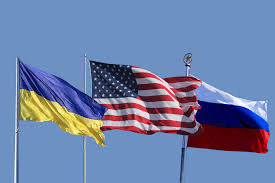
It is no surprise that the Ukraine negotiations are, once again, stuck on territorial issues. You do not need to look far to see the problem. US Vice President J.D. Vance has recently said, "the thorniest issues have never been resolved, including who will control the Donbas region."
While the US says there is some reason for guarded optimism, some European voices go further and argue that the negotiations are bearing fruit. Finnish President Alexander Stubb thinks "we are closer to an agreement than at any time."
The test will come soon as the Russians are briefed on the dialogues in Miami. Meanwhile, White House envoy Steve Witkoff, in a joint statement with Ukrainian security council head Rustem Umerov, called Sunday's (December 21) talks "productive and constructive", saying they "focused on a shared strategic approach between Ukraine, the United States and Europe."
Russia has compelling reasons to try and stay in the negotiations. For Russia, success is not defined as settling the conflict in Ukraine, which they claim they are winning. Rather, the Russians are looking for a strategic relationship with the United States as the desired outcome.
Not all the potential elements of a Russian-US strategic relationship appear, so far, to be on the table. What is known is that the main Russian negotiator, Kirill Dmitriev, has been discussing various investment and business schemes with top US negotiator Witkoff.
Such business arrangements might include joint projects in the Arctic region, a Trump target where Russia appears ahead of the United States, and potential cooperation in technology and minerals, including rare earths and uranium. Connected to these economic talks are the various US sanctions that would have to be lifted.
Because Dimitriev is an investment specialist and does not have a mandate to discuss strategic military issues, such discussions would be in the future. The Russians have often said they want to normalize relations with the United States and NATO and work out strategic agreements that stabilize US-Russian and Russian-European relations.
The same can be said of Witkoff and his associate, Trump son-in-law Jared Kushner. In fact, it isn't even clear if either has the necessary security clearances to participate in strategic dialogues with Russia.