










Breaking News
 Christmas Truce of 1914, World War I - For Sharing, For Peace
 The State's Last Stand
 The Roots of Collectivist Thinking
 What Would Happen if a Major Bank Collapsed Tomorrow?
Top Tech News
 Travel gadget promises to dry and iron your clothes – totally hands-free
 Perfect Aircrete, Kitchen Ingredients.
 Futuristic pixel-raising display lets you feel what's onscreen
 Cutting-Edge Facility Generates Pure Water and Hydrogen Fuel from Seawater for Mere Pennies
 This tiny dev board is packed with features for ambitious makers
 Scientists Discover Gel to Regrow Tooth Enamel
 Vitamin C and Dandelion Root Killing Cancer Cells -- as Former CDC Director Calls for COVID-19...
 Galactic Brain: US firm plans space-based data centers, power grid to challenge China
 A microbial cleanup for glyphosate just earned a patent. Here's why that matters
 Japan Breaks Internet Speed Record with 5 Million Times Faster Data Transfer



Are European Hawks Finally Sobering Up For Christmas?
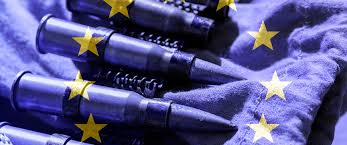
He has reacted on social media to recent remarks by German Defense Minister Boris Pistorius and Finnish President Alexander Stubb, saying he was struck by what he described as a noticeably softer approach toward Russia.
Even France's Emmanuel Macron has also of late reached out to Moscow, seeking to enter direct dialogue with President Putin over the future of the conflict. This is in large part appears motivated by Europe not wanting Washington to control the narrative on potential peace settlement.
Writing on his channel on the "Max" platform, Medvedev said he was surprised by the two leaders' positions, arguing that they appeared to diverge from what he called the prevailing European Union narrative of a "Russian threat," which he said has been driven by Brussels.
His comments come amid ongoing high tensions between Russia and Western countries, but as some European officials begin also to signal a more measured view of the likelihood of a direct military confrontation.
Medvedev wrote with in his characteristically sarcastic tone, "The 'European peacemakers' caught me off guard."
"Pistorius stated he doesn't believe a war between NATO and Russia is imminent, and Stubb acknowledged that Russia has no interest in attacking member countries of the alliance," he continued.
And then questioned, "What's going on? Are they finally sobering up, or have the Christmas holidays already begun?"
As a reminder, Christmas in Russia falls on January 7th, which is Russian Orthodox Christmas based on the older, pre-Gregorian calendar.
TASS notes to its readers that in Europe on Dec. 25 and after, "These days typically mark a holiday period extending through New Year's. In Germany, festivities often feature mulled wine and flaming punch, while in Finland, they enjoy even stronger Swedish glogg."
As for Pistorius' recent remarks in an interview with Die Zeit and elsewhere, he's apparently distanced himself from alarmism within NATO. Now he's saying he does not believe in a scenario of a full-scale war between Russia and the alliance. The German defense chief was actually pushing back against other hawks, a rarity:
He was commenting on remarks by NATO Secretary General Mark Rutte, who said the Alliance must be prepared for a war "on the scale experienced by our grandfathers and great-grandfathers". Pistorius responded bluntly, saying this was most likely a figurative exaggeration. "I do not believe in such a scenario. In my view, Putin does not intend to wage a full-scale global war against NATO." At the same time, he stresses that this does not remove the need to rearm the Bundeswehr. Recently, he said that the past summer may have been "the last peaceful one" for Europe.