










Breaking News
 Christmas Truce of 1914, World War I - For Sharing, For Peace
 The State's Last Stand
 The Roots of Collectivist Thinking
 What Would Happen if a Major Bank Collapsed Tomorrow?
Top Tech News
 Travel gadget promises to dry and iron your clothes – totally hands-free
 Perfect Aircrete, Kitchen Ingredients.
 Futuristic pixel-raising display lets you feel what's onscreen
 Cutting-Edge Facility Generates Pure Water and Hydrogen Fuel from Seawater for Mere Pennies
 This tiny dev board is packed with features for ambitious makers
 Scientists Discover Gel to Regrow Tooth Enamel
 Vitamin C and Dandelion Root Killing Cancer Cells -- as Former CDC Director Calls for COVID-19...
 Galactic Brain: US firm plans space-based data centers, power grid to challenge China
 A microbial cleanup for glyphosate just earned a patent. Here's why that matters
 Japan Breaks Internet Speed Record with 5 Million Times Faster Data Transfer



Aussie Leaders Crush Online Free Speech To Prop Up Failing Multiculturalism
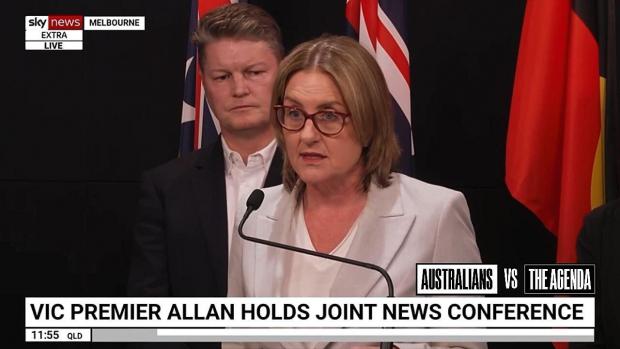
Victorian Premier Jacinta Allan has unveiled a sweeping plan to combat what she calls rising anti-Semitism, but the measures conveniently sidestep the core issue of unchecked radical Islamism behind recent attacks, focusing instead on doxxing anonymous social media users and reviewing gun laws.
In a joint news conference, Allan announced legislation that would force social media platforms to reveal identities behind anonymous accounts accused of spreading 'hate'. "Under Victoria's civil anti-vilification scheme which starts in 2026, the speaker of a vilifying statement generally needs to be identifiable and held accountable," she stated.
She continued, "We recognise that this could protect cowards who hide behind anonymous profiles to spread hate and stoke fear." emphasising, "That is why Victoria will spearhead new laws to hold social media companies and anonymous users to account and will appoint a respected jurist to unlock the legislative path forward."
The move comes in the wake of the horrific Bondi Beach attack, where Pakistani radicals with ISIS ties slaughtered 16 people, including Jews celebrating Hanukkah. Yet, rather than addressing the importation of radical ideologies through porous borders, Allan's response echoes the deflection seen from federal leaders.
Allan also announced a review of Victoria's gun laws, appointing former police chief commissioner Ken Lay to examine ways to "toughen" them further. This aligns with a national push for stricter controls, even as Australia's existing laws are among the world's toughest—proving once again that disarming citizens does little to stop determined terrorists.
Allan's government is also granting police new powers to ban protests in the aftermath of terror incidents, following New South Wales' lead. While framed as a response to anti-Semitism, the timing—right after an Islamist massacre—highlights a pattern of Aussie politicians avoiding direct confrontation with radical Islam.
Instead, figures like Allan and Prime Minister Anthony Albanese repeatedly spotlight "right-wing extremists" and "neo-Nazis" as the supposed primary threats. In the days following Bondi, Albanese warned of the "rise of right-wing extremists," despite the attackers' clear Islamist motivations.
This unwillingness to name radical Islamism head-on persists. Clips from recent press conferences show leaders dodging questions on Islamist radicalization, pivoting to vague warnings about "extremism" from all sides—but with a heavy emphasis on the far-right. For instance, in a Sky News appearance, Albanese reiterated concerns over "neo-Nazis" infiltrating protests, even as intelligence agencies thwart Islamist plots weekly.