










Breaking News
France's Immigration Party Coming to America: Faster Than You Think
A3Podcast 8 - Our Enemy, the State; Publishing and Accessing An IPFS Website; and more...
 Tuesday War Room LIVE – 'Let Us In': 1 Million Migrants Torch Italy As Trump Warns...
 The Fall of Saudi Arabia?
Top Tech News
 Solar Panels Are Doing Something Nobody Expected
 DeLorean climbs skyward to race electric flying cars
 Atari's 800XL returns with a keyboard, cartridges and BASIC
 Bioinspired robot airdrops into remote waters via morphing wing-sail
 Anduril interceptor adapts to emerging threats via swappable stages
 I Built a Website to Expose Solar and Battery Scams
 Whistleblower Issues Dire Warning: Rogue AI, Hacking Nuclear Programs...
 Multi-material insulation delivers up to 10,000 x the stiffness
 Anduril's plan to save US sub edge from China's undersea surge
 Researchers Develop AI 'Mind-Reading' Tool That Reconstructs What Your Eyes See



Where Do Microplastics Come From Anyway?
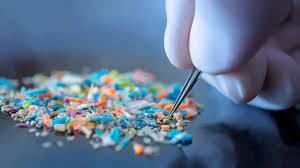
Microplastics are defined as plastic particles smaller than 5 mm.
These particles are found everywhere: in oceans, soil, drinking water, food, and even the air we breathe. Yet, the origins of these particles are often invisible to consumers.
Using data from the IUCN, CSIRO, and Elsevier, this graphic, via Visual Capitalist, by Made Visual Daily breaks down what actually makes up these particles and where they come from.
A breakdown of microplastic sources, compiled from multiple environmental studies:

The chart shows that the biggest contributor to microplastics is synthetic textiles, which account for 35% of the total. Tires (28%) and city dust (24%) are also major culprits, followed by road markings (7%) and a grab bag of other sources (6%).
How Do These Microplastics Enter the Environment?
Microplastics enter the environment in two main forms: primary and secondary.
Primary microplastics are released directly into the environment at a microscopic size. These include:
Fibers shed from washing synthetic fabrics like polyester, nylon, or acrylic.
Rubber dust worn from car and truck tires during normal use.
Fragments in city dust from the abrasion of paints, soles, furniture, and building coatings.
Plastic pellets ("nurdles") lost during plastic manufacturing or shipping.