










Breaking News
 Welfare Is Immoral in Any Country
 Hair-Raising Case: White Baltimore Arts Executive Fired For Wearing Cornrows
 The Honda NSX rises ... with more horsepower and carbon fiber
 'Hypocrite' Hillary Clinton is slammed for her comments on Fort Hood killer's...
Top Tech News
 Seven apps. One craft
 SHOCK CASE REPORT: Advanced Alzheimer's Patient Regains Speech, Memory, Mobility...
 Most artificial limbs rely on silicone or plastic to mimic human hands.
 Flying cell tower beams phone signal to Japan from 10 miles up
 Chinese Commercial Reactor Achieves Nuclear Fusion with Clean Hydrogen-Boron Fuel
 Med Beds Just Took a MASSIVE Step Forward, Healing People in Days!
 Palmer Luckey: Autonomous Weapons Are Ancient and Why Anduril Won't Build Humanoids | EP #295
 A laser just photographed objects through six feet of concrete
 Elon Musk's Next-Gen Motor Destroy Entire EV Industry
 China's disputed satellite refueling heralds new space war era



New battery idea gets lots of power out of unusual sulfur chemistry
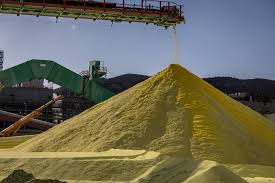
Anyone paying attention to battery research sees sulfur come up frequently. That's mostly because sulfur is a great storage material for lithium, and it could lead to lithium batteries with impressive power densities. But sulfur can participate in a wide range of chemical reactions, which has made it difficult to prevent lithium-sulfur batteries from decaying rapidly as the sulfur forms all sorts of unwanted materials. As a result, despite decades of research, very few lithium-sulfur batteries have made it to market.
But a team of Chinese researchers has managed to turn sulfur's complex chemistry into a strength, making it the primary electron donor in a sodium-sulfur battery that also relies on chlorine for its chemistry. The result, at least in the lab, is an impressive energy per weight with extremely inexpensive materials.
Sulfur chemistry
Sulfur sits immediately below oxygen on the periodic table, so you might think its chemistry would look similar. But that's not the case. Like oxygen, it can participate in covalent bonding in biological chemistry, including in two essential amino acids. Also, like oxygen, it can accept electrons from metals, as seen in some atomically thin materials that have been studied. But it's also willing to give electrons up, forming chemical compounds with things like chlorine and oxygen.
It's that last feature the researchers behind the new paper are most interested in. Pure sulfur forms an eight-atom complex that can give up 32 total electrons under the right conditions. The trick was finding the right conditions.
The system had a cathode of pure sulfur and an anode that was simply a strip of aluminum that acted as a current collector. The electrolytes the researchers tested contained a lot of aluminum, sodium, and chlorine (typically something like eight Molar aluminum chloride and a 4.5 Molar solution of some sodium salt). The aluminum helps stabilize the foil at the anode, while the other two chemicals participate in the reactions that power the battery.
When the battery starts discharging, the sulfur at the cathode starts losing electrons and forming sulfur tetrachloride (SCl4), using chloride it stole from the electrolyte. As the electrons flow into the anode, they combine with the sodium, which plates onto the aluminum, forming a layer of sodium metal. Obviously, this wouldn't work with an aqueous electrolyte, given how powerfully sodium reacts with water.